Summary:
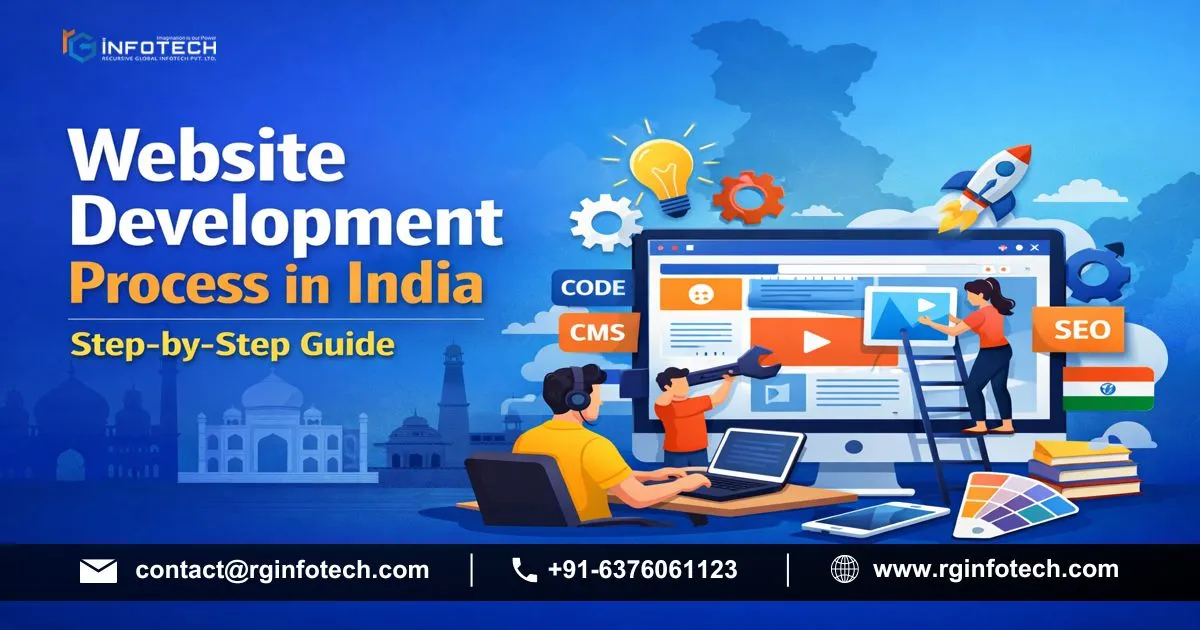
This guide covers the complete website development process in India, from planning, design, development, content, testing, and maintenance to the final launch of the website. This tells you the procedure of website development in detail. Following the steps mentioned below ensures you have a responsive website that provides an excellent user experience, improves search rankings, and drives business growth.
The web development process is essential for anyone looking to create a professional and effective online presence. Building a website may seem simple, but it requires many steps that must be followed with utmost care.
Without a clear plan, many people struggle with where to start, which steps to follow to build a website, and how to build a site that actually performs well in Google search results.
Website projects need to have a clear plan; otherwise, the site fails to deliver results. This is where the website development process comes into play.
Did you know?
Due to poor structure and lack of SEO practices, 90% of the website pages get no organic traffic from Google.
A slow and low quality of the website directly increases the bounce rate by over 30 to 40%.
Websites on the first page of Google receive over 91% of total traffic
Around 53.3% of website traffic comes from organic search.
These statistics show us the picture that if a website is not properly developed and optimized, then it’s not going to reflect on Google search.
The website development process is a structured process that is followed by the best website development company in India, which helps you in planning, building, designing & maintaining your website efficiently.
While developing a website, many people jump straight into designing and coding without developing a prototype for it; getting the right website development partner solves this issue.
In this guide, you’ll learn the complete website development lifecycle, which is broken down into actionable steps that anyone can follow easily.
Ready to Grow Your Business Online?
Let us help you build an SEO-friendly website with the help of a renowned website development company, RG Infotech, based in India.
8 Steps for the Website Development Process in India
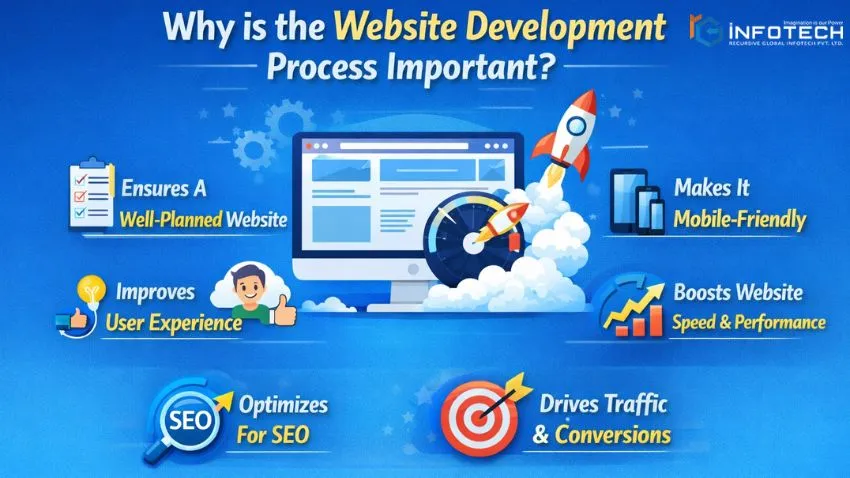
Creating a successful website requires a clear roadmap. The website development process provides a journey that turns your ideas into a functional digital experience. Understanding the process helps in building a website smoothly by following the structured steps:
Step 1: Planning Your Website Development Project
Website planning steps involve a clear understanding of your future website’s purposes, goals, and the target audience you want to reach with your website. It basically helps in creating a clear roadmap for building your website.
Every successful website starts with a solid plan and a website requirement analysis. Skipping the planning and research phase of the web development process leads to failure in the success of the website and in delivering results.
The planning stage of the website development process lays the foundation for development, design, and wireframing of the website. A well-planned website not only saves time and cost but also ensures better ranking of the website, plus a better user experience. To know about the website development cost, check our guide Website Development Cost in India.
1. Define Your Website Goals
Start by identifying the purpose of your website. Clear goals help you create high-performing pages.
2. Identify Your Target Audience
Understand the target audience of your website. This helps you create relevant content design for your website.
3. Perform Keyword Research
Keyword research is essential for the SEO success of the website. It helps you understand what users are searching for and what you need to focus on.
4. Analyze Your Competitors
You need to check the top-ranking websites on Google, their content structure, keywords used, and the backlink strategy they used to be in the top website in the specific niche.
5. Choose the Types of Websites
You need to choose between the different websites based on your domain. The different types of websites provided are:
- Static Websites: Simple and Fast Loading.
- Dynamic Websites: Interactive and Data Driven.
- eCommerce Websites: Online store website.
6. Plan Website Structure
Create a clear structure for your website. A good structure helps both the users and the search engine to navigate the site easily.
7. Define Features & Functionality
Define the features and functionality you want to add as per your service and product requirements.
Step 2: Choose Your Website Domain Name
A domain name is your website address on the internet. It helps users find your website.
Your domain name is more than just a web address; it’s a brand identity online for your users. Choosing the right domain during the website development process helps in improving visibility on Google.
A poorly chosen domain can confuse users, reduce clicks, and make it harder to rank keywords, which in the end affects the website ranking.
How to Choose the Right Domain Name
1. Keep it Short and Memorable
Shorter domains are easier to type, remember, and share between users.
2. Include a Relevant Keyword
If possible, include a keyword related to your niche.
3. Use a .com Extension as a preference
.com is the most trusted domain extension globally. Alternatives are .net, .org, or country-specific, as per the requirement.
4. Make it Brandable
Your domain should reflect your business. Brandable names are easier to market and remember.
5. Avoid Legal Issues
Check for trademarks or copyrights to avoid future legal problems.
Step 3: Choose Your Website Platform
A website platform is the software that helps you create, manage, and host your website from scratch. Your platform determines how your website is built, managed, and scaled for growth purposes.
A website platform is also known as a content management system that helps you build your website without having advanced coding skills.
You need to look into many factors while choosing your platform, such as SEO optimization, mobile responsiveness, loading speed, customization options, and long-term growth potential.
Picking the right platform ensures easy website management but also helps in higher ranking, attracting organic traffic, and delivering an amazing user experience.
Popular Platforms Include:
- WordPress: used for a content management system
- Wix: used for easy design
- Squarespace: No coding is required
- Shopify: for an e-commerce website or online store business
- Custom-coded solutions: using HTML, CSS, JS frameworks
Step 4: Building Your Website Structure, Design, And Wireframing Considerations
A well-planned website structure, design, and wireframe are essential in the website development process because they affect the website in terms of the user experience, search engine optimization with Google, and much more. This step helps make sure that the website is easy to navigate and conversion-friendly.
Building your Website structure
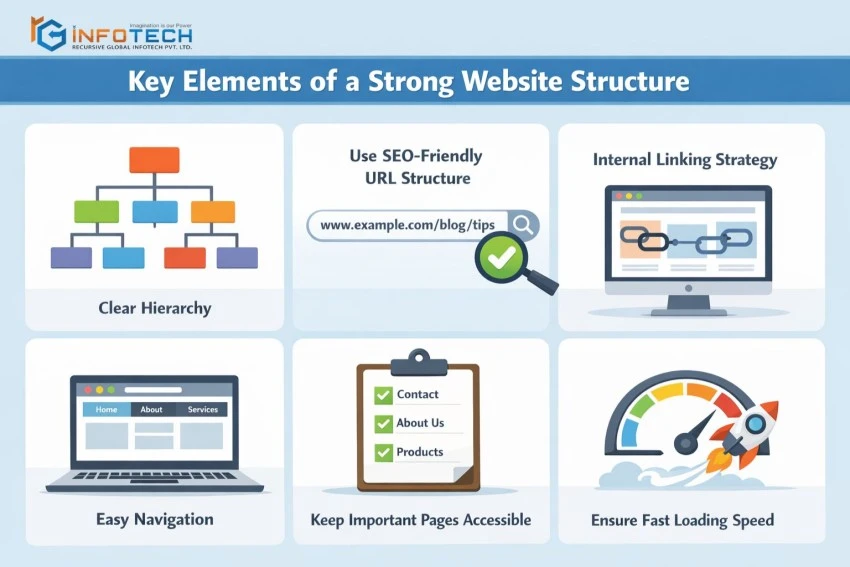
Website structure refers to how your pages are organized and linked together. A good website structure is an integral part of the web development process. It will define the user experience of moving around your website and also define how Google crawls and indexes your pages. A good structure will give you a better chance of landing on the first page of the search engine results.
Making Website Wireframing
Wireframing refers to building a blueprint of the website. It is a crucial step that involves the visual layout of the website before moving into design and development.
A wireframe is a skeleton of your website, which mainly focuses on layout and functionality rather than colors, fonts, or final design elements.
Popular wireframing tools include Figma, Adobe XD, Sketch, and Balsamiq. These tools help designers create interactive prototypes and collaborate efficiently.
Website Design
Website design refers to the visual appearance and usability of your site. A well-designed website not only gives the impression of professionalism but also keeps the visitors engaged, which is essential for ranking on the first page.
Design plays an extremely significant role in the development of the website as it affects the user experience and engagement.
Web Design vs Web Development
Many people often think that custom website design and development are the same thing, but they are not. They are two different things that are necessary in the development of a website.
Aspect
Web Design
Web Development
Focus
Visuals & User Experience
Functionality & Performance
Tools
Figma, Adobe XD
HTML, CSS, JS, PHP, etc.
Goal
Attractive & user-friendly
Working & efficient website
Role
Designer
Developer
Step 5: Creating Content For Your Pages
Once you have completed website wireframing and design, the next essential step is to crete high quality content for your web pages. Content is considered the backbone of your website; it plays a major role in the ranking of your website.
First, you need to know the search intent and include relevant keywords in your content to increase your search results.
You should write content that is easy to read and includes relevant headings like H1, H2, and H3 tags. You should include sections like services, cost, and FAQs, as this would provide value to the user.
You must update your content regularly to rank at the top, as Google favours content that is useful plus up to date.
Tips for Creating Quality Content
- Create Clear and Simple Language
- SEO optimize your content
- Focus on helpful, user-first content
- Engaging Headlines
Step 6: Development (Frontend & Backend Coding)
Once the design and wireframing of the website have been completed, the development stage begins. This is the stage where your website will change from being merely a design concept to a fully functional and interactive website. The coding of the website, both frontend and backend, is critical in ensuring a seamless user experience and SEO optimization.
Frontend Development
Frontend development is everything that the end-user can see and interact with on your website. It is also called client-side development.
Technology commonly used is HTML for structure, CSS for styling, and JavaScript (and frameworks like React or Vue) for interactivity.
Key Things To Focus On:
- Converting wireframes into actual web pages
- Designing responsive web page layouts for desktop, tablet, and mobile devices
- Adding interactivity to web pages, such as buttons and sliders
Backend Development
Backend development is also called server-side development. The backend of your website is where the logic of your website is written. The backend is also responsible for communicating with databases and servers.
Technologies commonly used by backend developers are PHP, Python, Node.js, Ruby, and databases like MySQL, MongoDB, and PostgreSQL.
Key Things To Focus On:
- Managing databases to store information such as users, orders, and content
- Implementing the logic to allow users to log in to the website
- Implementing APIs to retrieve and send information
- Making sure that the website runs smoothly even when it is receiving high traffic
Step 7: Testing and Launching Your Website
The next step after developing the website is to test and launch the website. This step ensures that the website is functioning properly, secure, user-friendly, and optimized for search engines. The launching of the website will ensure error-free functionality, user experience, and SEO.
Testing Your Website
When preparing to launch your website, it is important to carry out thorough testing. The main areas to pay attention to during this stage include:
- Functionality Testing: Ensure that all the buttons, forms, and links function as they should, and test other important functionalities, such as the login system and payment gateways.
- Browser Compatibility: Test your website on different browsers such as Chrome, Firefox, Safari, and Edge. This also ensures that your website design is consistent across different browsers.
- Mobile Responsiveness: Make sure layouts, images, and menus adjust properly for different screens. Mobile usability is essential for users and search engines like Google.
- Performance Testing: Make sure the page loads quickly using tools like Google PageSpeed Insights or GTmetrix. Optimize images, CSS, and JavaScript to speed up the page.
- Security Testing: Add SSL certificates to make sure the login process and data handling are secure.
Launching Your Website
After testing, it’s time to launch your website:
- Domain and Hosting: Connect your domain and hosting correctly.
- SEO Basics: Make sure you have meta titles, descriptions, headings, and an XML sitemap.
- Google Tools: Set up Google Analytics and Search Console.
- Final Review: Review all pages, links, and forms before launching.
Step 8: Maintenance and Updates
Having created and launched your website is only the first step in the journey. Maintenance and updates are equally important for keeping your website secure, fast, and optimized for users. Failure to do this could result in your website losing functionality and traffic in the long run.
You need to update plugins, themes, and CMS to prevent security risks. Optimize the images, scripts, and database to ensure smooth performance.
You should also ensure timely updates of content and SEO to ensure maximum traffic from Google. This will ensure you maintain high rankings on Google and provide a user-friendly experience.
Bring Your Ideas to Life with a Professional Website
Let us help you build a high-performing website with the expertise of RG Infotech.
Hire A Reliable Website Development Agency To Build A Website
The selection of the right agency is very important to build a professional website. RG Infotech is the best website development agency in India that provides expertise in designing, developing, and marketing websites to achieve business objectives. To know in detail how to choose a website development company in India, check our esteemed blog.
- Completed 1500+ projects in various sectors with successful outcomes.
- The company has 15 plus years of experience.
- They excel in frontend, backend, CMS, and e-commerce services.
- They create websites with SEO capabilities.
- The company offers updates and troubleshooting services.
- They do not charge hidden fees.
Conclusion
The website development process in India is a critical process that needs to be followed in order to ensure that the website is user-friendly, secure, and optimized for search engines.
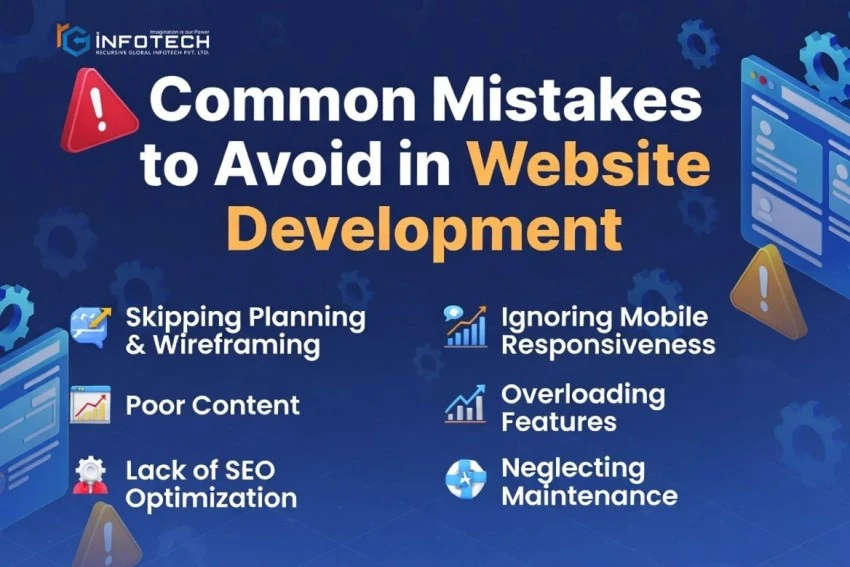
Hire web developers from us, and it can save you time and effort, and provide you with the best advice and a great website that meets your needs and requirements. There are some practices that need to be followed and common mistakes that need to be avoided in the process of website development in India for the long-term success of the website.