Summary:
This blog follows the ultimate guide of healthcare app development, from learning about various types of healthcare apps to determining must-have functionalities. It also encompasses essential areas, including regulatory compliance (HIPAA, GDPR), tech stacks, typical challenges, monetization models, and emerging trends such as AI, blockchain, and remote patient monitoring. This guide offers practical advice to design scalable, secure, and user-centered mobile health apps that improve patient outcomes.
The COVID-19 pandemic has transformed healthcare systems worldwide. When hospitals were overwhelmed and face-to-face consultations became difficult, healthcare mobile apps became lifelines for patients and clinicians.
Overnight, telemedicine transitioned from a luxury to a necessity for a smoother process. Giving people facilities like remote consultations, contactless prescriptions, and real-time health monitoring during lockdowns.
This change was not temporary. In the post-pandemic era, there remains a high demand for mobile health (mHealth) solutions, fueled by an increased desire for accessible, real-time, and patient-focused care.
Today, the healthcare sector is witnessing a digital revolution, and mobile apps are at the very epicenter of this change. From making an appointment with a doctor to controlling chronic diseases, healthcare mobile app development is connecting patients and providers, making healthcare more accessible, efficient, and personalized medicine apps than ever before.
This guide will take you through all you need to know about building a successful healthcare app, regardless of whether you are a startup entrepreneur, a healthcare professional, or an established medical facility.
What is Healthcare App Development?
Healthcare app development is the activity of developing mobile applications intended to provide medical services, handle patient information, and enhance access to general healthcare. They serve patients, physicians, hospitals, and caregivers by allowing real-time communication, distant monitoring, and access to digital health records.
As demand increases after COVID, mHealth app development has become pivotal for healthcare digital transformation. It integrates the best technology, compliance with regulations, and human-centered design to enable secure, effective, and scalable healthcare solutions.
Healthcare App Development Market Overview
The market for healthcare mobile apps is growing fast, with a revolutionary impact on healthcare delivery and experience worldwide. Recent statistics from Statista indicate that mHealth technologies are greatly improving healthcare systems by making them more efficient, cost-saving, and improving the quality of services. As smartphone usage continues to grow steadily, particularly in developed nations, mobile app healthcare access is becoming the new reality.
In 2024, 43% of U.S. residents reported using mobile apps related to health. In India, the figure was even greater, with almost 70% of the population utilizing apps tracking aspects such as nutrition, symptoms, or medication compliance. This increasing uptake reflects the overall trend toward more personalized, patient-focused care via digital channels.
As per Polaris Market Research, the global health care mobile app market was valued at USD 114.06 billion in 2024. This fast-growing industry is going to reach USD 165.22 billion by 2025, with an estimated growth rate of USD 4,710.54 billion by 2034.
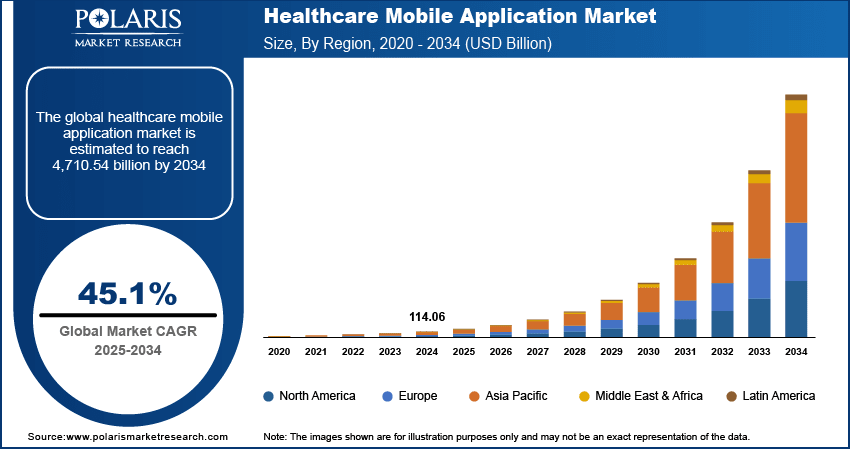
This expansion demonstrates a compound annual growth rate (CAGR) of 45.1% during the forecast period (2025–2034), illustrating rising demand for mobile health solutions and the key role played by digital technologies in revolutionizing the global healthcare sector.
Healthcare Has Gone Digital: Are You Ready?
More than 60% of patients prefer digital health tools to traditional visits. The worldwide mHealth market will reach over $300 billion by 2026. Don’t get left behind.
Collaborate with RG Infotech to develop a secure, scalable, and easy-to-use healthcare application that revolutionizes patient care and fuels business growth.
Benefits of Healthcare Apps for Patients and Providers
Health-related mobile apps are revolutionizing the medical service experience for their users. They introduce efficiency, accessibility, and convenience for medical professionals and ordinary patients alike. Following, we oversee the specific advantages healthcare apps present to each category:
Medical Officer
General Patients
Effective Patient Management
Healthcare applications enable providers to monitor patient information, schedules, and treatment plans from a single platform, saving time and minimizing administrative efforts.
Benefits for General Patients
Convenient Scheduling of Appointments
No more standing in queues or being on hold. Patients can book, change, or cancel appointments in a few taps.
Telemedicine and Remote Consultations
Physicians can provide virtual visits, examine lab tests, and write prescriptions all via secure video or chat, eliminating unnecessary in-clinic visits.
Access to Personal Health Record
Users have access to their medical history, lab test reports, medications, and vaccination records at all times, everywhere.
Real-Time Access to EHRs
Electronic access to Electronic Health Records (EHRs) improves decision-making and correct diagnosis, and treatment planning.
Remote Consultations
Telemedicine services provided by digital health apps bring doctors to patients remotely for real-time advice, convenient for old, disabled, or remote patients.
Automated Scheduling and Reminders
Appointment scheduling, cancellations, and rescheduling are automated, minimizing no-shows and administrative burdens.
Medication Reminders & Alerts
Synchronized push notifications remind patients to take their medication on time, enhancing adherence and results.
Improved Patient Engagement
Applications can support follow-up, tracking of health, and instantaneous communication, resulting in better treatment compliance and patient satisfaction.
Health Monitoring with Wearables
Integration with wearable devices and IoT for healthcare apps enables patients to monitor vital signs such as heart rate, sleep, blood pressure, etc.
Secure Communication
With end-to-end encrypted chat or video equipment, medical workers are able to talk back and forth confidentially and meet HIPAA and GDPR.
Mental Health & Wellness Support
Most apps provide tools to manage stress, guided meditation, and access to licensed therapists, all of which support body and mind.
Types of Healthcare App Development
The medical world has changed a lot in recent days, and healthcare mobile apps are the main cause of the change in terms of their digital presence. They are meant for different types of users, from patients and physicians to hospitals and fitness enthusiasts.
Knowing the various categories of medical apps is vital for anyone who wants to create a healthcare solution that brings tangible value.
1. Patient-Centric Healthcare Apps
Patient-facing apps are the most prevalent in the digital health space. They enable people to take charge of their well-being by providing functionalities such as:
-
-
-
- Symptom checkers
- Medication reminders
- Appointment scheduling
- Access to electronic health records (EHRs)
- Remote consultations
-
-
App
Purpose
Chronic Disease Management Apps
Track and manage long-term conditions (e.g., diabetes, hypertension).
Medication Reminder Apps
Notify users to take meds, refill prescriptions, and avoid dosage errors.
Personal Health Record (PHR) Apps
Store, manage, and share health records securely.
Fitness & Wellness Apps
Promote exercise, healthy habits, and preventive care.
Women’s Health Apps
Focus on menstrual tracking, pregnancy, fertility, and maternal care.
Rehabilitation Apps
Support recovery from surgery or injury with guided exercises.
Nutrition & Diet Apps
Provide meal plans, calorie tracking tools, and personalized dietary recommendations.
Why it matters: These apps enable enhanced patient engagement and better health outcomes by facilitating frequent monitoring and more convenient communication with healthcare providers. Example: MyChart, Medisafe
2. Doctor/Nurse-Focused Healthcare Apps
These apps are designed specifically for healthcare professionals like doctors, nurses, and specialists. Typical features include:
-
-
-
- Electronic access to patient charts
- Medical calculators and diagnostic aids
- Secure messaging and team communication
- Scheduling and task management
-
-
App
Purpose
Clinical Reference Apps
Provide quick access to drug databases, medical guidelines, and protocols.
EHR Access Apps
Allow doctors/nurses to view and update patient records on the go.
Medical Scheduling Apps
Manage appointments, shifts, and surgeries efficiently.
Teleconsultation Apps
Facilitate virtual consultations with patients.
Case Collaboration Apps
Enable secure communication and collaboration with other healthcare staff.
Training & CME Apps
Deliver continued medical education and certifications.
Why it matters: Through administrative workload reduction and acceleration of decision-making, these apps assist in enhancing care efficiency and alleviating burnout among healthcare professionals. Example: Doximity, Epocrates
3. Hospital Management Apps
Hospitals and big healthcare institutions utilize these apps to manage internal operations and enhance the delivery of service. Important features include:
-
-
-
- Staff scheduling and shift planning
- Inventory and supply chain management
- Patient admission and discharge process workflow
- Billing and insurance management
-
-
App
Purpose
Electronic Health Record (EHR) Systems
Centralized access and management of patient records.
Inventory & Supply Chain Management Apps
Track medical supplies, equipment, and pharmaceuticals.
Billing & Insurance Apps
Manage patient billing, insurance claims, and payment records.
Staff Scheduling Apps
Allocate shifts, manage absences, and track staff availability.
Patient Flow Management Apps
Monitor admissions, discharges, and transfers in real time.
Facility Maintenance Apps
Ensure timely maintenance and management of hospital infrastructure.
Why it matters: These apps maximize hospital resource management and coordination between departments, resulting in improved patient care and lower operational costs. Example: CGM CLININET
4. Telemedicine Apps
Telehealth applications have become a necessity, particularly post-COVID-19. They allow:
- Real-time video consultations
- Remote diagnosis and treatment
- E-prescriptions
- Payment integration and follow-up scheduling
App
Purpose
General Teleconsultation Apps
Provide remote consultations for primary care and general health concerns.
Specialty Telehealth Apps
Focus on remote care for dermatology, psychiatry, cardiology, etc.
Emergency Telehealth Apps
Connect patients with providers instantly in emergencies.
Remote Monitoring Apps
Continuously track vitals via IoT devices and send alerts to doctors.
Pharmacy-Linked Telehealth Apps
Allow consultations and direct e-prescriptions to partner pharmacies.
Why it matters: The apps eliminate geographical restraints, minimize wait times, and expand access to care, particularly in underserved communities. Example: Teladoc, Amwell
Also Read Blog: Telemedicine App Development for Healthcare
5. Mental Wellness Apps
As growing awareness of mental well-being takes hold, apps in this space are experiencing explosive growth. They provide:
- Tracking of mood
- Tools for Cognitive Behavioral Therapy (CBT)
- Mindfulness and meditation activities
- Access to licensed therapists through chat or video
App
Purpose
Mood Tracking Apps
Monitor daily emotional states and mental health trends.
Mindfulness & Meditation Apps
Offer guided meditations, breathing exercises, and stress reduction tools.
Therapy & Counseling Apps
Provide virtual access to licensed therapists or AI-based support.
Sleep Improvement Apps
Help manage insomnia or sleep disorders through CBT, soundscapes, and tips.
Addiction Support Apps
Offer recovery programs, tracking, and peer/community support.
Self-Help & Cognitive Therapy Apps
Use CBT techniques to manage anxiety, depression, and negative thinking.
Why it matters: These apps provide on-demand mental health care, enabling people to better deal with stress, anxiety, depression, and more, without the stigma sometimes present with traditional therapy. Example: Fitbit, MyFitnessPal
Key Features for Healthcare Mobile Apps
In the changing digital health landscape, just building a healthcare app is not sufficient; it has to provide actual value, usability, and trustworthiness. If you are creating a telemedicine platform, a patient portal, or a hospital management system, the inclusion of the right features is essential for functionality and user satisfaction.
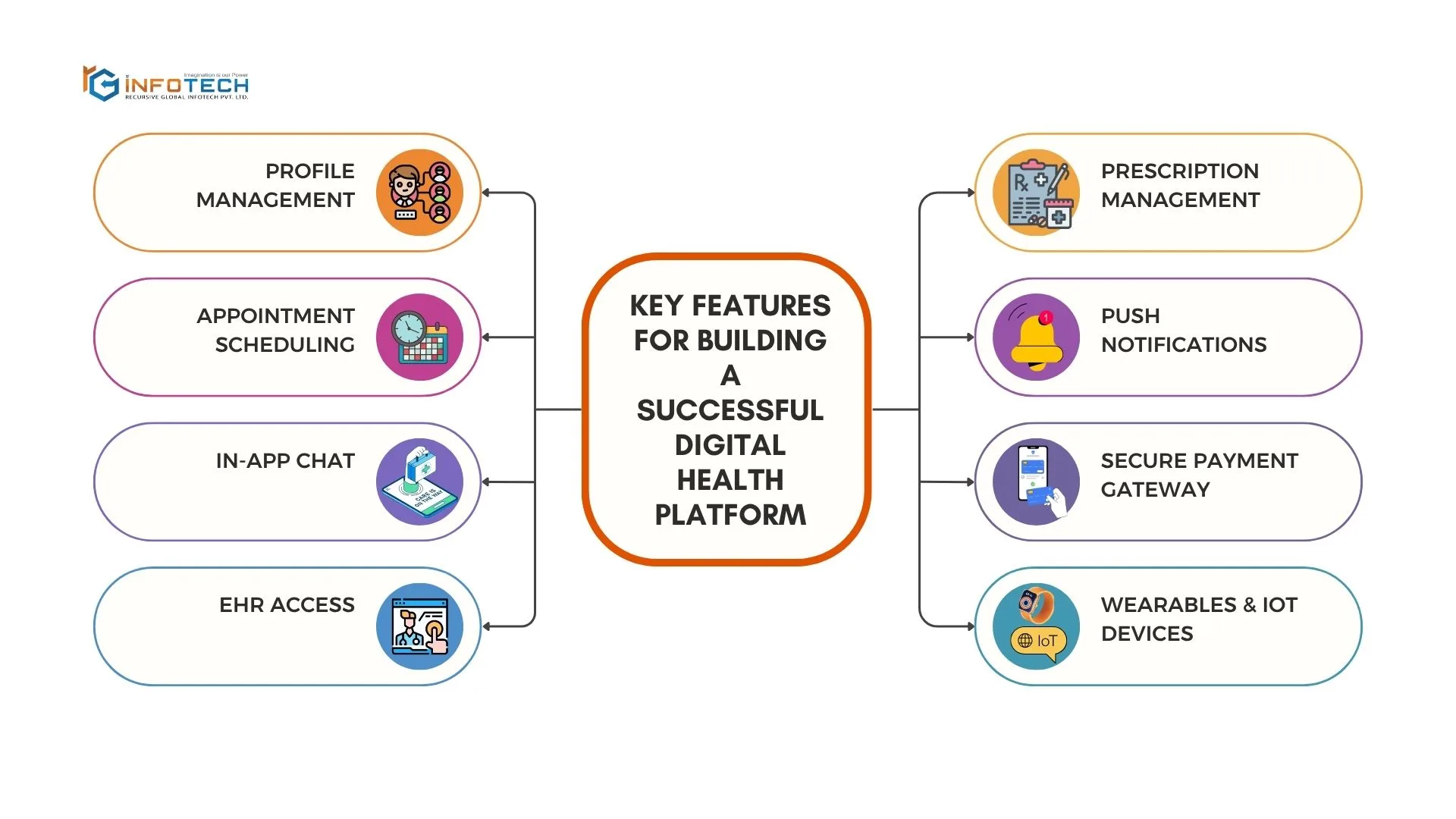
1. Profile Management
The initial impression of your application is a seamless sign-up process. It should be easy for users to sign up while making sure their medical information is being processed securely.
2. Appointment Scheduling
Perhaps the most sought-after functionality of any medical mobile app is booking doctor appointments easily and efficiently.
Also Read: Doctor Appointment App Development Company
3. In-App Chat
Telemedicine isn’t a nicety anymore; it’s a necessity. Providing secure video consultations and chat capabilities is the foundation of contemporary healthcare service delivery.
4. EHR Access
Both patients and medical providers appreciate rapid access to electronic health records (EHRs). Your app should facilitate this conveniently and securely.
5. Prescription Management
Your app should make it easier for users to monitor medication and get new prescriptions.
6. Push Notifications
Engage and keep patients healthy with timely reminders. Push notifications may include appointment reminders or rescheduling, Medication reminders, follow-up, and check-in reminders.
7. Secure Payment Gateway
Make it simple, quick, and secure for patients to pay for medical services in the app.
8. Wearables & IoT Devices
Integration with smart healthcare devices provides users and physicians with real-time health information such as heart rate, sleep, and blood glucose levels.
If you want to know in detail about the essential features to be included in a healthcare app, then check our blog on Top 10 Features for Doctor Appointment Booking App to get detailed insights.
How to Build A Healthcare App from Concept to Launch
Building a healthcare mobile app is about providing a secure, trustworthy, and intuitive solution that is compliant with regulations and truly enhances patient care or clinical processes. Below is the step-by-step guide to healthcare mobile app development.
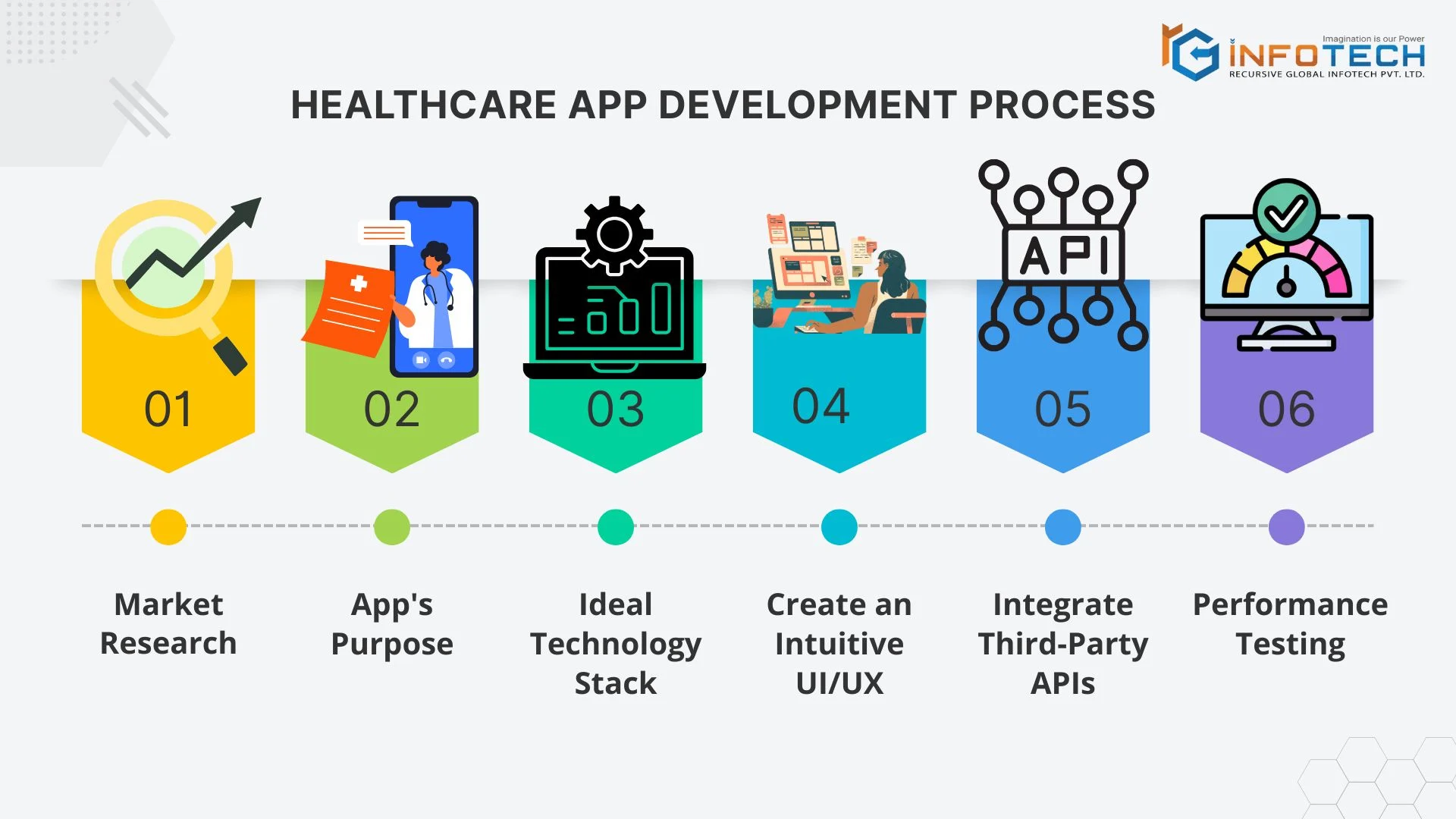
1. Do Market Research & Requirement Analysis
It is essential to learn about your target users, patients, doctors, hospitals, or insurers before plunging into development. Analyze competitors, understand pain points, and assess current gaps in the healthcare app market.
2. Define Your App's Purpose, Goals & Target Audience
Every successful healthcare app addresses a particular problem. Whether your app is a telemedicine app, a mental health tracking app, or a hospital management solution, it is crucial to have a clear definition of the app’s mission and target audience.
Ask yourself:
-
-
-
- What am I trying to solve?
- Who will use this app?
- What do I want users to achieve?
-
-
3. Select the Ideal Technology Stack
Picking the correct tech stack makes your app future-proof, scalable, and secure.
-
-
-
- Frontend: React Native, Flutter (cross-platform)
- Backend: Node.js, Django, or .NET
- Databases: MongoDB, PostgreSQL
- Cloud: AWS, Azure, or Google Cloud
- Security Tools: OAuth 2.0, JWT, SSL, HIPAA-compliant frameworks
-
-
4. Create an Intuitive UI/UX
In a healthcare app, user experience is not just about looks; it’s about accessibility and trust.
Design points of note:
-
-
-
- Easy to navigate
- Large, easy-to-read fonts
- Accessible color contrast
-
-
5. Build the Healthcare Mobile App (Frontend & Backend)
After finalizing the design, start actual development:
-
-
-
- Frontend Development: Make user interfaces responsive and cross-platform compatible.
- Backend Development: Develop secure APIs, database management, and server-side logic.
-
-
6. Integrate Third-Party APIs & Services
Typically, most medical apps require third-party integrations:
-
-
-
- EHR/EMR systems (e.g., Epic, Cerner)
- Telehealth SDKs (e.g., Agora, Twilio)
- Wearable device APIs (e.g., Apple HealthKit, Google Fit)
- Secure Payment Gateways (e.g., Stripe, PayPal)
-
-
7. Performance and Usability Testing
Testing is critical in healthcare app development. You’ll need to test for:
-
-
-
- Functionality: Does every feature work correctly?
- Security: Is sensitive data encrypted and protected?
- Compliance: Does the app meet HIPAA, GDPR, FHIR, or HL7 standards?
- Usability: Is the user journey intuitive for both patients and providers?
-
-
If you are new to this market and don’t have an idea about the development process, then don’t miss our guide on how to build a healthcare app, encompassing app types, tech stack decisions, compliance (HIPAA/GDPR), and launch best practices by following the blog.
Best Practices for Secure Healthcare App Development
Healthcare mobile app development requires a balance of strong security features and an engaging user experience. It is essential to ensure the privacy of data and make the app easy and entertaining for users to succeed in the competitive market. Below are some best practices to adopt for secure and user-friendly healthcare software development:
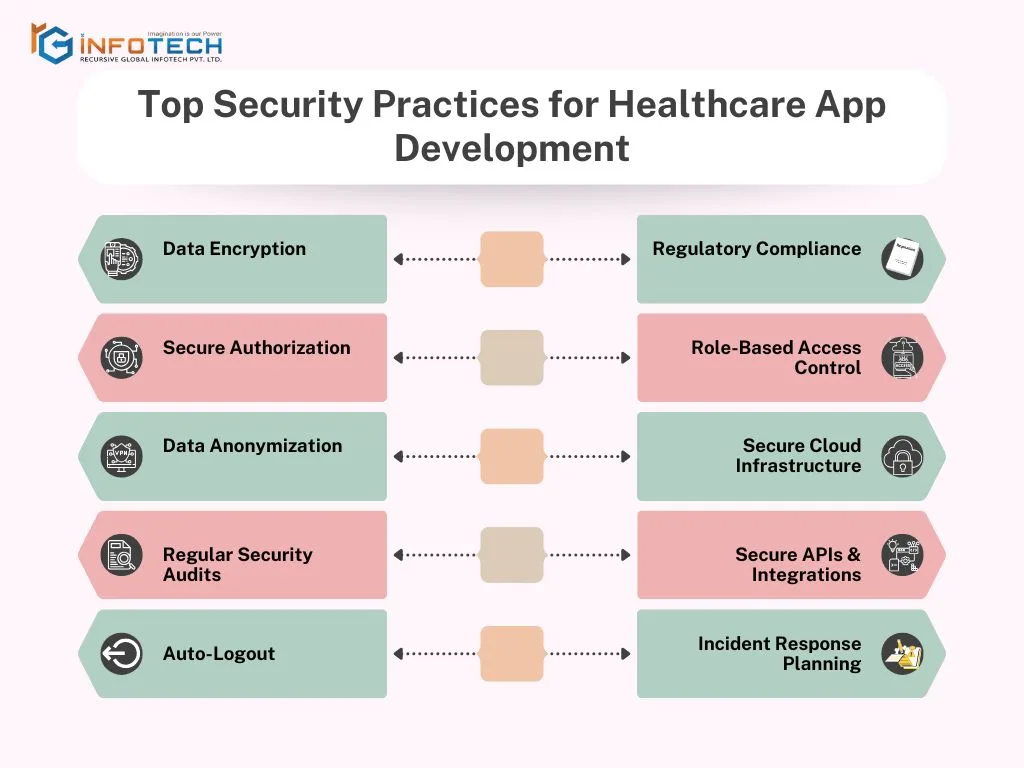
End-to-End Encryption
Secure all patient information in transit and at rest with robust encryption technologies such as SSL/TLS and AES-256. Provide secure communication between the app, server, and third-party services.
Regulatory Compliance (HIPAA/GDPR)
Comply with all applicable regulations to safeguard user information and prevent legal problems. Continuous audits and documentation ensure compliance readiness.
Role-Based Access Control (RBAC)
Restrict access according to user role to avoid unauthorized data exposure. Limit users to access only the data that is critical to their role.
Secure Authentication & Authorization
Enforce MFA and utilize secure protocols such as OAuth 2.0. Always keep passwords stored hashed and salted (e.g., bcrypt).
Data Minimization & Anonymization
Gather only the data that you require and anonymize sensitive data. This helps to minimize risk and enhance privacy law compliance.
Regular Security Testing
Conduct regular penetration testing and vulnerability scans. Patch issues ahead of time before attackers can find them.
Secure APIs & Integrations
Implement authentication, rate limiting, and data validation for all APIs. Only integrate with trusted, HIPAA-compliant third-party services.
Secure Cloud Infrastructure
Employ healthcare-compliant cloud providers with encryption and VPCs. Store data securely backed up, and have access tightly controlled.
Session Management & Auto Logout
Auto-log out idle users and regularly expire tokens. Aids in keeping unauthorized access from lost or stolen devices out.
Incident Response Planning
Have a defined, documented incident plan for data breaches and security incidents. Monitor user activity logs to facilitate audits and investigations.
Compliance and security are not optional in the healthcare mobile app development space; they are mission-critical. With apps managing sensitive patient information, any slip can result in regulatory fines, data breaches, and user trust loss. Let’s explore the vital healthcare app compliance requirements and security measures you need to adhere to.
Major Compliance Requirements in Healthcare App Development
1. HIPAA (Health Insurance Portability and Accountability Act – USA)
If your app is to be sold in the U.S. and deals with PHI, HIPAA compliance is required.
2. GDPR (General Data Protection Regulation – EU)
If your app is targeting users within the European Union, you are required to adhere to GDPR.
3. HL7 and FHIR Standards
Health Level 7 (HL7) and Fast Healthcare Interoperability Resources (FHIR) are standards for the exchange of healthcare data between systems.
Technology Stack for Mobile Health Apps Development
A good tech stack guarantees performance, scalability, and security.
Frontend & Backend Technologies
React Native or Flutter for healthcare apps, Node.js, Django, or Ruby on Rails for backend.
Database & Cloud Services
Firebase, AWS, Azure, or Google Cloud for storing data and server administration.
APIs and SDKs
Use Twilio (for chat/video), Stripe (for payments), and Apple HealthKit or Google Fit (for wearables).
AI/ML for Predictive Analytics
Incorporate machine learning to allow for capabilities such as symptom prediction, risk assessment, or smart triage.
Top Healthcare App Development Trends for 2025
The healthcare sector is experiencing a digital revolution, and mobile apps are the epicenter of this revolution. The following are the top healthcare app development trends in 2025 that are revolutionizing the way healthcare is provided, accessed, and managed:
1. Artificial Intelligence (AI) & Machine Learning (ML)
AI in healthcare app development and ML are improving diagnosis accuracy, treatment customization, and predictive analysis. Healthcare applications currently use these technologies to offer real-time symptom diagnosis, virtual health helpers, and smart care recommendations, enhancing speed and quality of care.
Example: AI-based apps for skin cancer screening or chronic disease tracking.
2. Remote Patient Monitoring (RPM)
Increased use of telehealth has made RPM applications built into mobile apps to continuously monitor vital signs, medication compliance, and health outcomes at home. It minimizes hospitalization and allows for preventive action for chronic diseases.
Example: Wearable-connected apps monitoring heart rate, glucose, or oxygen saturation.
3. Blockchain for Securing Healthcare Data
Blockchain provides a medical history and increases transparency in sharing health data. In 2025, anticipate greater use of blockchain-enabled apps to protect Electronic Health Records (EHRs) and grant patient control over data access among providers.
Example: Blockchain-enabled personal health record (PHR) apps.
4. Voice and Brain-Computer Interfaces
Apps in the next generation will utilize voice interactions and new Brain-Computer Interfaces (BCIs) to provide hands-free, intuitive interaction, particularly useful for disabled patients, older users, and stressful clinical settings.
Challenges in Healthcare App Development
Creating a healthcare mobile app is a fulfilling but demanding process. From compliance regulations to intricate integrations, healthcare app developers have their own set of challenges that involve specialized solutions and domain expertise. Let’s discuss the most significant challenges in healthcare app development and how to address them.
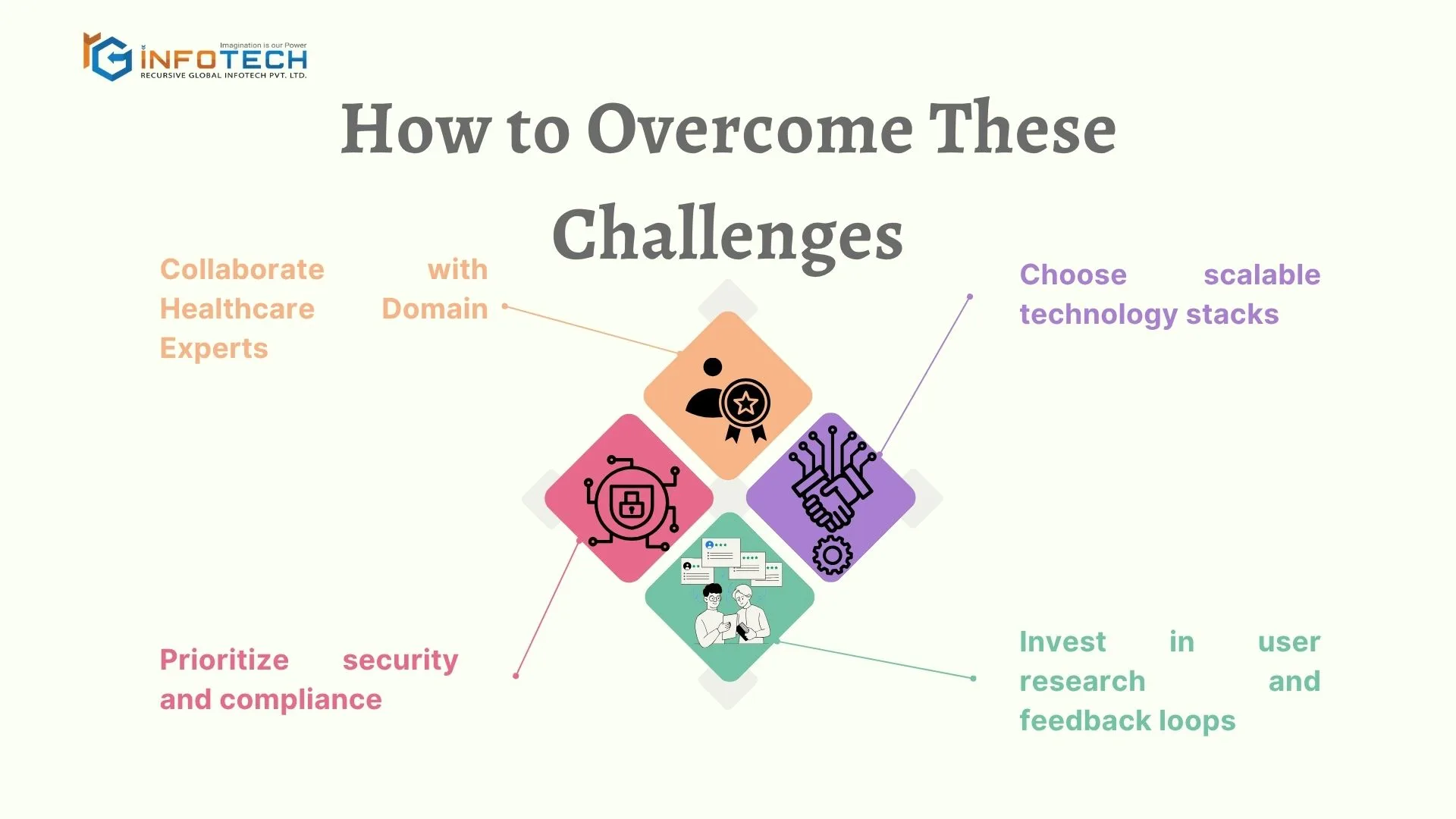
1. Data Security & Privacy Issues
Healthcare applications deal with sensitive patient data and are, therefore, a target for attacks and data breaches. Providing HIPAA-compliant security, secure user authentication, and data encryption during transmission is a major challenge.
2. Regulatory Compliance Complexity
Dealing with a maze of regulations like HIPAA (USA), GDPR (EU), and FDA regulations for medical devices is overwhelming. Being compliant affects app design, dealing with data, and even marketing tactics.
3. Integration with Legacy Healthcare Systems
Most healthcare professionals continue to employ legacy systems to use Electronic Health Records (EHR) or run hospitals. InterSystems for integrating new apps with such systems through standards like HL7 or FHIR can be technically challenging and take a lot of time.
4. User Adoption and Retention
Even the best app for healthcare will fail if users don’t adopt it or churn off rapidly. Healthcare professionals and patients can be resistant to new technology through unfamiliarity or distrust.
5. Interoperability Challenges
Healthcare applications tend to require data exchange in an interoperable manner between other systems, applications, or devices. It is challenging to achieve interoperability without compromising security and compliance.
6. High Development and Maintenance Expenses
Establishing a safe, compliant, and feature-packed healthcare application involves a considerable investment in talented developers, testers, legal advisors, and hardware.
7. Managing Varied User Needs
Medical apps are used by a broad base of users, including older patients and hectic physicians, with varied needs and technology familiarity.
To overcome all these challenges, we need to adhere to our regulatory compliance and seek help from an expert in this field to get proper guidance.
How To Generate Revenue From a Healthcare App
Create money with a healthcare mobile app from in-app subscriptions, freemium approaches, teleconsultation charges, affiliate marketing, data monetization (obtained consent), ads, hospital or insurer partnerships, and premium features or integration sales to clinics and healthcare professionals. Want to make your healthcare app a profit-generating engine? Below are the tested frameworks:
Subscription Models
Provide tiered feature access with monthly or yearly schemes.
Freemium with Premium Features
Gather users through core features and upsell sophisticated tools.
In-App Purchases
Sell add-ons such as expert content, virtual sessions, or individual health plans.
White-Label Solutions for Clinics and Hospitals
License your app to healthcare providers with their own branding.
Cost of Healthcare App Development
One of the most common questions asked by startups, healthcare professionals, and investors is: How much will it cost to create a healthcare mobile app in India?
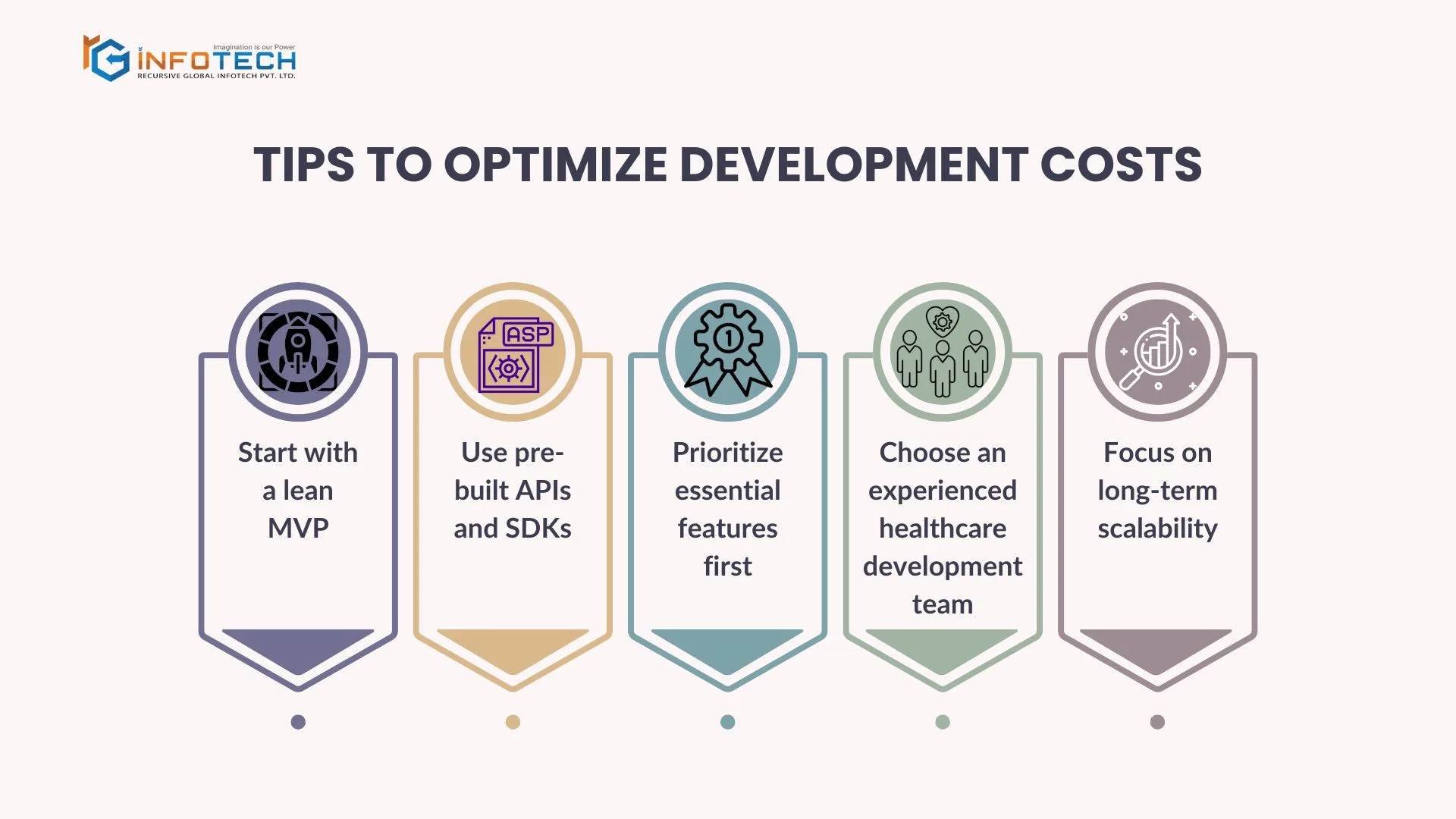
The solution isn’t one-size-fits-all. The price of healthcare app development is influenced by various factors such as complexity, features, compliance needs, and the location of the development team.
The price of creating a healthcare mobile application is very volatile, varying from tens of thousands to far more than a million dollars.
Key Factors Affecting Cost
Complexity of Features: An application with AI-based diagnostics and EHR integration will be much more expensive than a basic appointment scheduling app.
Compliance Requirements: Integrating HIPAA or GDPR compliance requires specialized developer knowledge and rigorous security testing.
Design (UI/UX): A Unique, user-friendly, and accessible design increases the cost.
Technology Stack: Native app development (for both iOS and Android separately) is generally pricier compared to cross-platform platforms (such as Flutter).
Location of Development Team: Hourly rates differ wildly by region (such as North America versus Eastern Europe versus Asia).
Approximate Cost Ranges
-
-
-
- Basic App: $30,000 – $50,000
- Mid-Level App: $50,000 – $100,000
- Advanced App: $100,000+ (includes AI, integrations, real-time video, etc.)
-
-
Let’s Create a Smarter, Safer Healthcare App
Join hundreds of providers making the transition to mobile-first care. From conception to release, RG Infotech brings your application to life — securely and seamlessly.
How RG Infotech Helps in Building Scalable and Secure Healthcare Apps
We specialize in creating custom healthcare mobile apps that are secure, scalable, and completely compliant with industry standards such as HIPAA, GDPR, and HL7/FHIR.
Our highly experienced team integrates deep domain understanding with innovative technologies to craft seamless digital health products that raise the bar for patient care and streamline clinical processes.
If you’re a startup or an enterprise-sized provider, we provide solutions specific to your distinctive objectives.
What We Provide:
-
-
-
- GDPR & HIPAA Compliant App Development
- Custom Telemedicine and Remote Monitoring Apps
- Real-time Chat & Video Consultation Integration
- Third-party API & EHR/EMR System Integration
- Analytics Dashboards for Smart Decision Making
- Cloud-based Infrastructure for Scalability & Security
-
-
Future of Healthcare App Development
The future of healthcare app development is shaped by AI, telemedicine, wearable integration, and improved data security. These advances hold promise for personalized care, improved accessibility, and seamless patient monitoring, transforming the way healthcare services are delivered worldwide.
1. Sophisticated AI and Genomics
Medical apps will leverage AI and genomic information to provide hyper-personalized treatment from DNA-driven disease risk prediction to suggesting tailored treatment regimes based on an individual’s genetic profile.
2. Decentralized Healthcare Ecosystems
Future healthcare apps, with blockchain and Web3 technology, will offer secure, decentralized ownership of medical records, transparent sharing of data, and even tokenized health incentives, putting patients in control of their health data.
3. IoMT and 6G-Based Autonomous Health Monitoring
IoMT (Internet of Medical Things) and connected wearables, coupled with super-fast 6G networks, will make real-time, autonomous monitoring of health possible — enabling early detection, immediate alerts, and ongoing care, even in remote regions.
4. Intuitive Interaction Through Voice and Brain-Computer Interfaces
Future apps will employ voice directives and advanced Brain-Computer Interfaces (BCIs) to provide hands-free, natural interaction, particularly useful for disabled patients, seniors, and stressful clinical settings.
Conclusion: The 2025 Ultimate Guide to App Development for Healthcare
Building a healthcare app is a fulfilling experience. It presents the opportunity not only to develop a successful product but also to actually enhance the quality and availability of care for millions.
Success depends on a strong dedication to user requirements, strong security protocols, and a steadfast commitment to regulatory compliance.