Summary:
Learn how to develop an smart AI Trip Planning Apps in 2026. Understand key features, architecture, technology stack, cost of development, APIs, common issues, and ways to build AI travel planner app.
A vacation plan goes beyond choosing a destination. It requires comparing flights and hotels, exploring destinations, building practical schedules, setting budgets, accounting for travel time, and adjusting plans as circumstances change.
Travel plans can be quickly generated by an AI-driven plan generator by understanding the preferences, budget, dates, interests, and restrictions of travelers.
The right blend of AI technology, travel APIs, maps, recommendation systems, and live data allows startups to create products that are much more valuable compared to those of itinerary apps.
This guide will help you understand how to develop your own AI trip planner app, including its features, architecture, AI technology used, APIs, development process, technology stack, development cost, monetization approaches, and risks that startups face.
Turn Your Travel Concept into an AI-Based App
Want to develop an intelligent AI-based travel itinerary app which can provide customized travel suggestions? RG Infotech will help you convert your concept into a scalable travel solution through the power of AI, APIs, maps, and other features.
Talk to our experts and let our team build an AI-based travel itinerary app as per your business requirements.
What Is an AI Trip Planner App?
AI trip planner applications refer to travel applications that incorporate the concept of artificial intelligence into the application process to assist travelers in planning and organizing their trips. Users are no longer required to search through various sites for destinations, hotels, food options, places to visit, means of transport, and other activities.
For instance, a tourist may input:
“Arrange for a 7-day family trip to Dubai at a budget of $2500 that includes fun activities for kids, good dining spots, and minimal travel between destinations.”
This AI-based vacation planner will then be able to plan the trip accordingly by analyzing the needs and requirements of the tourists.
How Does an AI Trip Planner Work?
A basic travel trip plan involves combining artificial intelligence, travel APIs, recommendation systems, maps, and real-time data to make an itinerary for your travels.
Here is how it works:
- User inputs his/her travel needs – destination, date, budget, number of travelers, interests, and activities.
- The system interprets the request – the system converts the user’s natural language into travel requirements.
- Data for travel is gathered — the application gathers data related to attractions, hotels, restaurants, transportation, weather, and other services related to travel.
- The itinerary is planned through AI — an individual schedule is created using the information that has been collected.
- The itinerary is verified — hours of operation, distances, travel time, costs, and other limitations are analyzed.
- The trip is optimized — activities may be planned in such a way that they minimize travel and fit the traveler’s preferences.
- The user can edit the itinerary — the traveler can ask AI to modify the plan according to activities, cost, length, and other itinerary aspects.
The best AI trip planner tools use a combination of AI functionalities with credible travel data and practical testing instead of using only an AI model.
Essential AI Trip Planner App Features
An intelligent AI trip planner should not just create an itinerary but should know what the traveler prefers, integrate AI with up-to-date information about travel and keep adjusting it as per the changing requirements of travelers.
The best way for startups is to include key functionalities in MVP and then introduce intelligent AI later on.
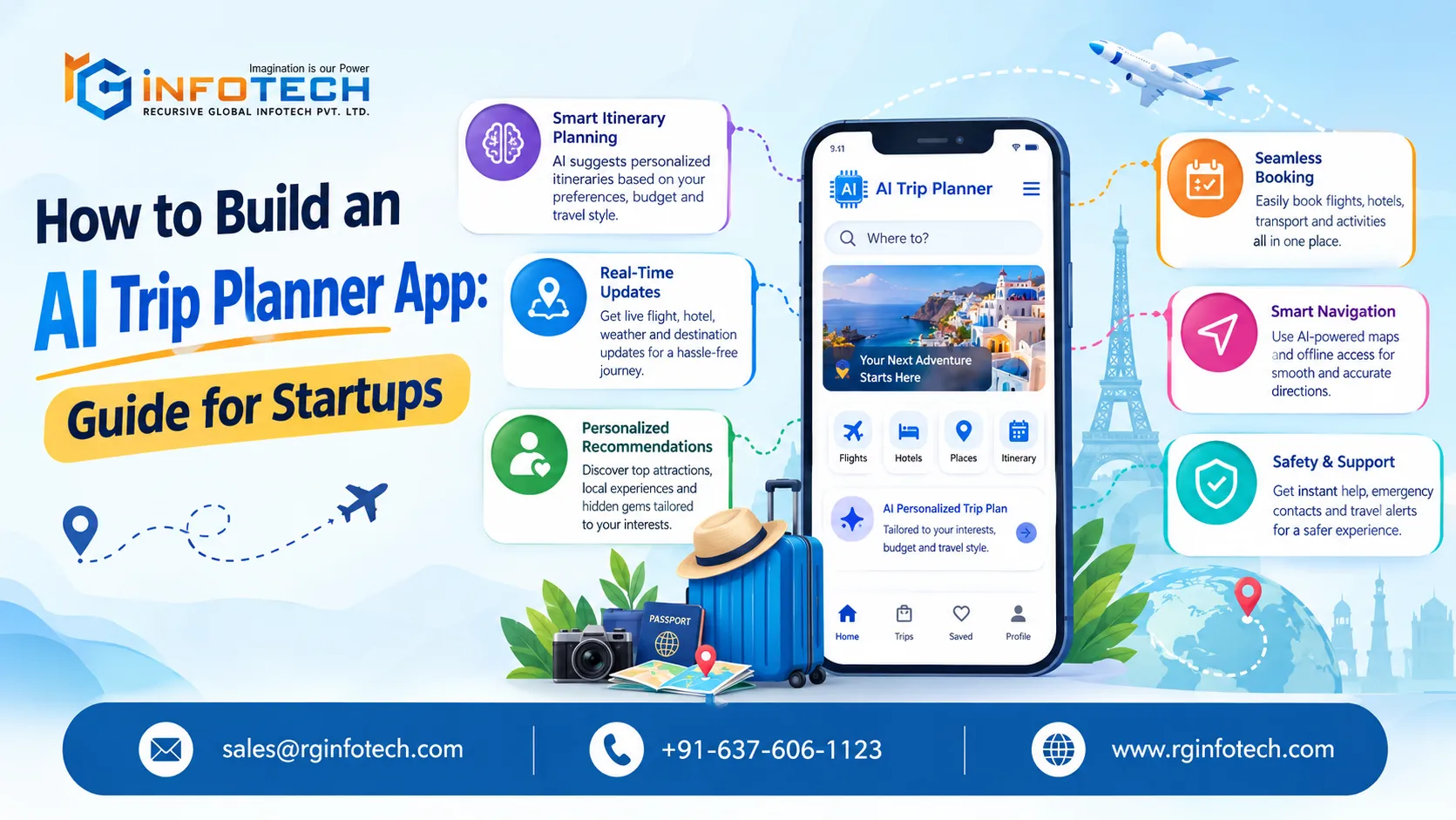
- AI-based Itinerary Creation – Personalized itinerary for each day according to budget, interests, date, and other preferences.
- Intelligent Route Optimization – Schedules activities in accordance with distance, travel time, timing, and other user preferences.
- Flexible Trip Rescheduling – Makes changes to itineraries based on weather conditions, availability, and other preferences.
- Personalized Recommendations – Recommends hotels, restaurants, attractions, and things to do based on user’s habits and interests.
- Traveling AI Assistant – Conversational AI for trip planning, recommendations, changes, and general travel queries.
- Real-Time Travel Integration – Integrates with maps, flight, hotels, weather, and other travel API for real-time information.
The key here would be to have an AI trip planner that would incorporate all of the mentioned elements of the itinerary process into one system.
As far as start-ups go, it would be best for them to begin their business operations with an MVP that will include the basic planning experience and only later add advance features.
To know all the essential features for travel booking app check our esteemed guide on Top Features Every Travel Booking App Must Have in India.
How to Build an AI Trip Planner App
In order to build an AI journey planner, integration of AI, travel APIs, personalization, and itinerary optimization would be needed. In case of start-ups, the most appropriate strategy would be to go for an MVP first and scale it according to feedback from users.
Identification of Target Market – Identifying what kind of travelers make up your target market, such as solo travelers, family travelers, business travelers, or budget travelers.
Core Features Planning – Begin by developing some core features like artificial intelligence trip creation, personalized recommendations, budget planning, mapping, and conversation-based travel help.
Select the AI & Technology Stack – Pick an AI technology like GPT, Gemini, and Claude along with other technologies that will be used for frontend, backend, databases, maps, and cloud services according to your product’s needs.
Use Travel APIs – Integrate APIs of maps, hotels, flights, attractions, weather, restaurants, and other travel information to give useful recommendations.
Build the AI Itinerary Engine – Design processes to incorporate user preferences, gather appropriate information regarding travel, create itineraries, and make activity optimizations based on time, distance, budget, and availability.
Test and Release MVP – Test the AI-created itineraries for their accuracy and feasibility, release an MVP, gather user feedback, and slowly incorporate additional features like dynamic replanning, AI-based agents, and real-time travel tracking.
To get into details of travel app development check our guide on Travel Planner App Development: Features, Cost & Complete Guide.
Technology Stack for AI Trip Planner App Development
The AI trip planner technology stack for a scalable travelling solution must support all the features of AI-based suggestions, live travel information, personalization, and itinerary optimization.
Layer
Recommended Technologies
Frontend
React, Next.js, Flutter, React Native
Backend
Node.js, Python, FastAPI
AI/LLM
OpenAI, Google Gemini, Anthropic Claude
AI Frameworks
LangChain, LlamaIndex
Database
PostgreSQL, MongoDB
Vector Database
Pinecone, Weaviate, pgvector
Maps & Location
Google Maps Platform, Mapbox
Travel APIs
Amadeus, Sabre, Travelport
Cloud & DevOps
AWS, Google Cloud, Docker
Cache & Performance
Redis
Analytics
Google Analytics, Mixpanel
React Native, along with Python or FastAPI, PostgreSQL, an LLM API, Google Maps, and Redis forms a realistic stack for the development of a minimum viable product for a startup company. This will lay a solid foundation for the generation of AI routes, recommendations, and other features in the future.
AI Trip Planner Monetization Ideas
Trip planning with AI can earn money by using many different business models where startups can make both recurring revenue and make money through commissions from travel-related businesses.
- Freemium Business Model – Give away basic trip planning for free and charge for advanced AI functions or premium suggestions for trips.
- Subscription Models – Monthly or yearly plans that include things like advanced personalization, AI support, and unlimited trips.
- Affiliate Commissions – Earn money through affiliate commissions by directing people to hotels, airlines, tour companies, and more.
- Premium Itineraries – Bill users for tailor-made itineraries, including luxury tours, honeymoon tours, or multi-country tours.
- B2B & White Label Solutions – Provide an artificial intelligence-based travel planning tool for travel agencies, hotels, tourism organizations, and corporate travel firms.
- Sponsored Recommendations – Collaborate with related travel firms for promoting hotels, dining places, or experiences through the application as sponsored recommendations.
Cost to Develop an AI Trip Planner App
The AI trip planner app development cost depends on Its Features, Complexity of AI Algorithm, Integrations, Platforms, and Development Team. The Startup Can Save on Initial Cost by developing an MVP and Adding Additional Features Later.
An MVP for a simple AI trip planner might need a fairly limited development budget; however, a more advanced application that features AI bots, real-time information, booking options, maps, personalization, voice commands, and automatic itinerary planning might need significantly more funding.
Startups should not be trying to make everything right away. An MVP can be used to validate the basic concept before any money is invested in advance ai features.
App Type
Estimated Cost
Development Time
Basic MVP
$25,000–$50,000
AI itinerary, preferences, maps, basic recommendations
Mid-Level App
$50,000–$100,000
Advanced personalization, APIs, itinerary optimization, admin panel
Advanced AI Travel Platform
$100,000–$250,000+
AI agents, bookings, real-time updates, advanced personalization, scalable infrastructure.
Creating & Deploying Your Travel App Using Artificial Intelligence
Transform your travel company concept into reality with the help of our expert team at RG Infotech. We will be able to create an AI-enabled trip planning app that meets your business requirements and budget.
Need any help? Get in touch with us today.
Common Challenges in AI Trip Planner App
Designing an AI-powered trip planning application is not just about incorporating an AI system. Several technical and UX-related issues need to be considered:
- Accuracy of Information Generated by AI: AI might produce inaccurate or out-of-date travel information that needs to be verified using appropriate sources of information.
- Real-Time Information: Prices for flights, hotel booking, weather, traffic and attractions schedules may change very often, which demands timely updates via APIs.
- Personalization: An itinerary created according to the user’s preferences in terms of cost, interests, type of traveling and schedule.
- Integration With Multiple Travel APIs: The integration process will involve connecting multiple APIs that could result in higher development costs.
- Optimization of Itinerary: The application has to take into consideration the distance involved, hours available, length of time for activities, budget, and preferences of users.
- Scalability and Performance: As more users access the AI-based application, more requests and API calls could lead to performance and cost issues.
- Travel Preferences, Personal Data, Payment Information: They should be kept safe and in compliance with any relevant data protection regulations.
Such obstacles can be overcome through proper data sources, artificial intelligence verification, optimal architecture, and constant monitoring. This is the key to developing a reliable AI travel planner.
Build a Smart AI Trip Planner App With RG Infotech
Looking to develop a travel technology application using AI? RG Infotech is a leading AI travel app development company that provides services to help start-ups and organizations, develop smart travel applications using AI-based itinerary creation, recommendation engine, map creation, travel APIs, and more.
Whether it is an MVP, advanced AI-based travel apps, or other software products – our professionals will assist in choosing the appropriate features, technologies, architecture, and development roadmaps for your product.
Conclusion
Developing an AI trip planning application does not simply entail linking an LLM with a travel site.
A real-world product would need:
AI + travel data + recommendation logic + mapping + APIs + validation + personalization + good UX.
The best possible approach to start a business is by developing an MVP that addresses one specific travel planning problem.
The main challenge is not just to create even more plans written by the AI.
The challenge is to develop an infrastructure that assists the traveler in making optimal decisions with minimal efforts.
Provided your AI travel planner is capable of understanding the needs of a traveler, acquiring credible data, accounting for limitations, creating an itinerary and modifying it, you will get an opportunity to turn your tool into an all-around AI travel assistant.