Summary:
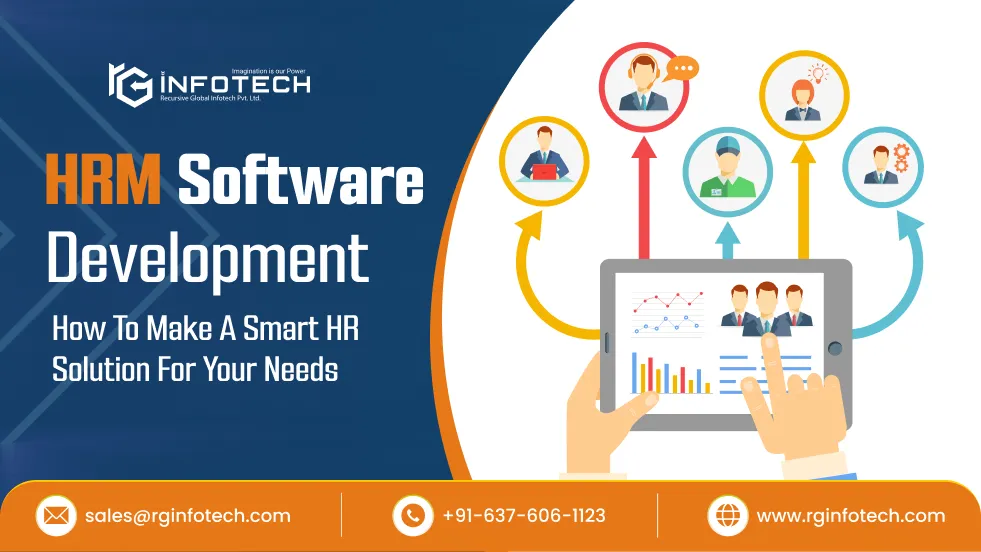
This HR management system development guide provides knowledge of the HR system in detail. This blog entails the development of HRM software, its key benefits to businesses by automating their processes, increasing their efficiency, and providing a better employee experience. By choosing the right HRM system features, technologies, and developers, businesses can develop a future-ready HRM system that helps the company in streamlining its productivity and growth.
The Custom HRM software has evolved Human resource management beyond spreadsheets and the manual hiring process and documentation.
According to Grand View Research, the HR market size is projected to reach USD 36.62 billion by 2030. Today, we have seen rapid digital changes with positive results in the HR industry. HR management software helps companies to increase employees’ efficiency and reduce administrative costs.
A successful business needs an integrated HR management information system that helps in managing business analytics, automation, and process transparency. Today business heavily rely on HRM software to make data-driven decisions for the company.
In this guide, we’ll cover all about HRM software development, including types, features, and a step-by-step process to build an HR management system.
What Is HRM Software and Why Is It Important?
HRM, also known as Human Resource Management, is a digital platform designed by developers or professional HRM software development companies to manage and optimise HR processes such as recruitment, payroll, employee records, and performance tracking.
HRM has advanced the game by providing AI-based suggestions to improve employee performance. This software is designed in such a way to help the company in everyday HR management activities.
Earlier, HR department are managed manually, that are time-consuming, resulting in a lot of paperwork and a high risk of human errors. Human resource management software development has changed the game of HRM by providing multifunctional activities that cover the routine work of HR experts.
So, you might end up questioning yourself about what is the importance of a custom HR solution. Some of the reasons are listed below to conclude the importance of HRM in business.
- Automates repetitive HR tasks
- Reduces human errors
- Enhances employee experience
- Improves decision-making with analytics
- Ensures compliance with labour laws
As per the survey, businesses using HR software reported higher productivity and reduced operational costs.
Get a Custom HRM Solution for Your Business
Ready to take the first step towards a more efficient and smarter approach to your business’s HR functions with a custom solution for your business needs?
Get in touch today to get a free consultation and project estimate.
Benefits Of HR Software For Businesses
HRM software development helps business owners to streamline their operations, improving overall employee efficiency and reducing manual workloads. Here are the benefits of using a smart HR management system:
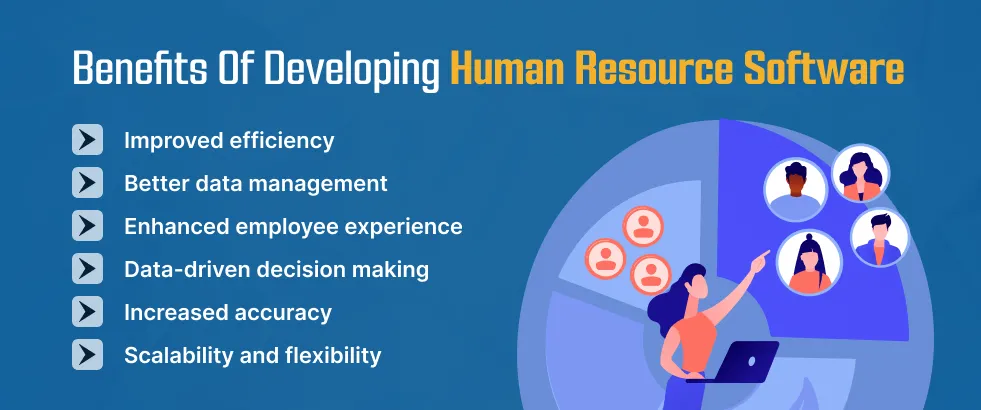
Increased Efficiency and Automation
HRM software helps with daily manual tasks like payroll processing, attendance tracking, and employee data management. This helps in reducing manual errors and save time of the HR department.
Data-Driven Decision Making
With analytics and reports, the HR manager can track employee performance easily. It also helps them in analysing attrition rates and forecasting needs.
Cost Reduction
Automating HR processes helps companies with administrative cost efficiency and lower dependency on manual labour.
Improved Employee Experience
Overall HR system provide employee self-service portal, easy leave request, and transparent payroll access. This helps in increasing employee satisfaction and engagement.
Better Data Security and Compliance
HRM software development ensures security in employee data storage. All HRM system features comply with labour laws and regulations, and control access through user permissions. This helps in reducing risks related to data breaches and legal issues.
Remote Workforce Management
With cloud-based HR software solutions, we can enable virtual onboarding, manage remote teams, and track attendance from anywhere. It is useful for a hybrid and remote work environment.
Types of Custom HRM software
HRM software comes in different types, each is designed to handle the specific needs of the human resource function. Understanding these categories in detail helps business owners to develop the right solution as per their business requirements. Some of the HRM software are as follows:
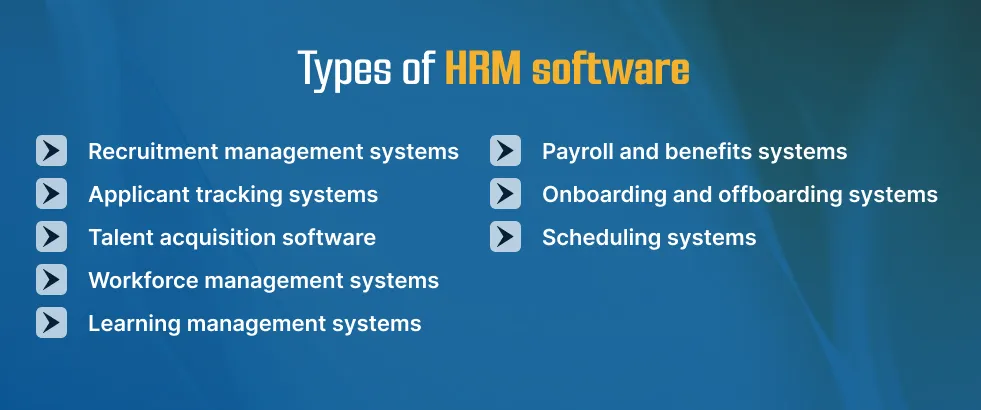
1. Recruitment management systems
Recruitment management software helps organisations in streamlining the hiring process by managing job postings, candidate applications, and interview scheduling. This HR software helps HR teams to hire faster and more efficiently.
Key features:
- Job posting across multiple platforms
- Candidate communication
- Interview scheduling
- Recruitment analytics
2. Applicant tracking systems
An Applicant Tracking System is designed to track candidates throughout the hiring process. It helps in resume parsing, candidate filtering, and workflow automation. ATS helps in improving hiring accuracy and reducing manual effort by quickly identifying the best candidates for the vacant job profile.
Key features:
- Resume parsing and keyword filtering
- Candidate database management
- Automated workflows
- Status tracking.
3. Talent Acquisition software
Talent acquisition software focuses on long-term hiring strategies. It helps in building employer branding and searching best talent for hiring. It is ideal for companies looking to attract top talent.
Key features:
- Talent pool creation
- Employer branding tools
- Candidate relationship management (CRM)
- Recruitment marketing
4. Workforce Management Software
A workforce management tool helps in managing employee productivity and time. They are primarily used to monitor employee workforce operations. It tracks employees’ attendance, shift scheduling, and time tracking. It is useful for agencies with a large employee structure or that have shift based workforce.
Key features:
- Time and attendance tracking
- Shift scheduling
- Labor forecasting
- Performance monitoring
5. Learning Management Systems
A learning management system is used by business owners to provide training to new employees or to upgrade the skills of current employees. It helps in improving employees’ performance and retention. It supports continuous learning in employees and develops them effectively.
Key features:
- Online training modules
- Skill development programs
- Progress tracking
- Certification management
6. Payroll and benefits systems
The payroll and benefits system automates the financial aspects of HR related to employee compensation. By providing salary processing, tax calculations, and benefit management. These systems ensure accuracy, transparency, and manage everything according to legal compliance.
Key features:
- Salary processing
- Tax calculations and compliance
- Benefits administration
- Payslip generation
7. Onboarding and offboarding systems
This HRM tool helps in simplifying employees’ entry and exit from the company. It includes document collection, orientation workflow, and exit formalities. It ensures a smooth experience, improves the employee experience, and reduces HR workload. They improve employee satisfaction and reduce administrative workload.
Key features:
- Digital document submission
- Orientation workflows
- Exit management
- Compliance tracking
8. Scheduling systems
Scheduling HRM software helps in managing employees’ working hours and their availability. Their key functions include shift planning, resource allocation, and availability tracking. It is essential for businesses with dynamic schedules. It is useful for industries like healthcare, retail, and hospitality.
Key features:
- Shift planning and allocation
- Availability tracking
- Real-time updates
- Workforce optimization
Top Features To Include In Your HR Management Software
To build HR management system, you need to include the right features in HRM software development. If you are building HR software from scratch, you can get all the functionality you consider essential. Here are some of the top features of HR management system that most companies include:
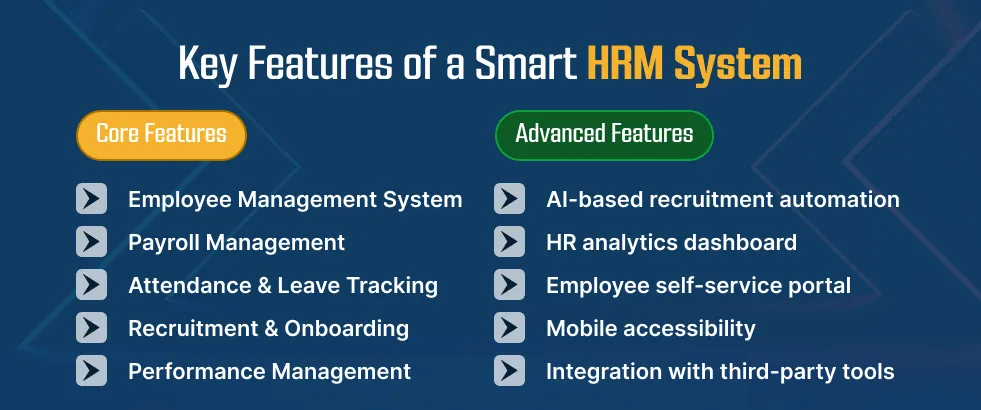
Employee Management Software
A centralised employee database is the foundation of HR software. This feature ensures easy access to employee information and improves organisational data. It helps in storing employee profiles and records, managing employees’ documents and contracts, and tracking roles, departments, and hierarchy
Payroll Management System
Automating payroll reduces human errors and saves time. Accurate payroll management builds trust and ensures legal compliance. It helps in salary calculation, Payslip generation, Tax deductions, and compliance
Attendance Tracking System & Leave Management
It helps in tracking employee working hours and leave requests efficiently. The HR teams manage workforce availability effectively. The leave management feature provides real-time employee attendance tracking, enabling easy leave requests and approvals.
Recruitment Software & Applicant Tracking System (ATS)
Hiring the right talent is essential in the long run for business growth and success. An integrated ATS helps streamline the company’s entire hiring process. The HR team benefits by delegating tasks like job posting management, resume parsing, candidate tracking, and interview scheduling.
Performance Management System
You can track employee performance, which is essential for growth prospects. It also helps in identifying top performers and finding the key areas of improvement. It basically include KPI dashboard, a feedback system, performance reviews, goal setting and tracking of an employee towards their goal.
HR Analytics Tool & Reporting
It enable HR team to track employees’ performance, monitor attendance trends, and analyse hiring metrics. The custom dashboard insight help business in making strategic decisions. Data-driven decisions are the future of HR. It helps in enhancing overall organisational efficiency and productivity.
Mobile Accessibility & Third-Party Integrations
Mobile accessibility helps employees and the HR department to manage tasks anytime, anywhere through their smartphones. Third-party integrations connect HR software with tools like payroll, CRM, and accounting systems to ensure efficiency in data flow, reduction in manual work, and overall business operation efficiency.
AI & Automation Features
HR Automation Software & AI Features help in improving the efficiency of human resource functions by automating tasks such as resume screening, interview scheduling, and answering employees’ questions. AI-based information helps in improving decision-making processes, the accuracy of the hiring process, minimising human errors, and increasing efficiency.
How To Develop HRM Software
Developing HRM software requires a strategic approach to stay ahead of competitors. Below is the HRM software development process that helps you build a scalable HR solution.
1. Identify the specifics of the HR solution
The first step in HRM software is to plan your business requirements and define the purpose of the HRM software development. This step helps solve real-life HR department problems and ensures alignment with company objectives.
The key actions performed in this step involve:
- Identify target users such as HR teams, managers, and employees.
- Define core features like payroll, recruitment, attendance, etc.
- Analyse competitors and existing HR solutions
- Set clear goals and KPIs
2. Find a tech partner
The next is to choose the right HR software development partner is essential to building a successful HR solution. A trusted HR software development company helps in reducing development risks and helps in ensuring quality delivery.
The key requirement to look in an HR developer :
- Experience in HR software development
- Strong portfolio and case studies
- Expertise in modern technologies
- Positive client reviews
3. Further outline the solution
Once you have selected the right HR management software development company, the next step is to create a detailed roadmap for your HR project. In this phase, the idea is transforming into a structured development plan.
The key actions performed in this step involve:
- Feature prioritization
- System architecture planning
- Technology stack selection
- Timeline and budget estimation
4. Create the UI/UX design
User experience plays a major role in the success or failure of the HR software. A well-designed HR software interface helps in improving user adoption and engagement. The designer should include all the features that can be required by the company in the long run.
The focus area in this step involves:
- Simple and intuitive navigation
- Mobile-friendly design
- Interactive dashboards
- Accessibility for all users
5. Build an MVP
The key benefits performed in this step involve:
- Faster time to market
- Lower development cost
- Early user feedback
- Risk reduction
6. Develop the solution
Once you have completed the MVP procedure, the next step is to actually start building the HRM software. This stage converts your MVP into a complete enterprise-ready HR system. If you select the HR software development company, then in this step, your involvement is related to checking the progress and discussing the further steps.
The key activities performed in this step are:
- Add advanced features (analytics, AI, integrations)
- Optimise performance and scalability
- Ensure data security and compliance
7. Test and maintain the product
The work on HRMS software development is not done after developing an HR app; it needs to be tested rigorously, and in order to work well, the solution requires yearly maintenance and upgradation. Testing ensures that your HR software runs smoothly without errors. Continuous improvement keeps the system relevant and competitive.
Testing Types:
- Functional testing
- Security testing
- Performance testing
Maintenance Includes:
- Regular updates
- Bug fixes
- Feature enhancements
Transform Your HR Process with Advanced Technology ?
Are you looking to take your HR process to the next level by incorporating AI-powered features and HR automation software into your system? Create a future-proofed HR solution that meets the needs of the modern workplace.
Book a demo with us today and let us bring your HR software dreams to life.
Cost of HR Management Software Development
The cost of developing HR software varies based on the features, complexity, and business requirements. On average, HR software development costs can range from $20,000 to $250,000+.
Estimated Development Cost (2026)
- Basic HR Software: $20,000 – $50,000
- Mid-Level HRM System: $80,000 – $150,000
- Advanced HR Platform (AI + Integrations): $150,000 – $300,000+
- Enterprise-Grade HR Solution: $300,000 – $500,000+
The price of developing an HR software initially may seem high, but a well-built HR system will gradually provide you with long-term ROI through automation, efficiency, and improved workforce management.
How to Choose the Right Development Partner for HR Software
Selecting the right development partner is an important decision in building HR management software. The right development partner helps in the success of your project. To choose the right development company, you need to go through the following points:
Evaluate Industry Experience
You must look for a company with proven experience in HR SaaS development. Expeienced companies reduce development risks and deliver faster results.
2. Check Portfolio
A strong portfolio indicates the ability to handle complex HR systems. You must review the company’s past projects to assess the company’s expertise.
3. Assess Technical Expertise
A technically strong team can build scalable HR solutions. We need to ensure the development partner is skilled in modern technologies
4. Communication & Transparency
Clear communication is essential for project success. Transparency ensures smooth collaboration and fewer delays.
5. Focus on Security & Compliance
HR software handles sensitive employee data. Your development partner must follow the data protection standard.
One of the reliable choices in the market is RG Infotech, a leading HR software development company in India and globally, with 15+ years of experience in developing a custom HR solution. Hire an HRM software developer from RG Infotech; they are going to cover every feature from payroll and attendance to analytics and AI-driven features.
Future Trends in HR Tech
The HR technology is rapidly evolving with artificial intelligence, data analytics, and changing workforce expectations. In 2026, HR tech will shift from simple HR automation software to employee-centric systems. Here are some of the recent future trends in HR systems as follows:
1. Rise of AI-Powered HR Systems
Artificial intelligence is becoming an integral feature of HR systems, from recruitment to performance management.
2. Predictive People Analytics
HR is moving from a descriptive reporting function to predictive analytics. Businesses can now predict employee turnover, performance, and hiring requirements using data-driven insights.
3. Human + AI in HR software development
The future of HR does not involve the replacement of humans with AI, but rather a combination of humans and the efficiency of AI for better hiring, decision-making, and management of employees in a transparent way.
4. Unified HR Platforms & Integrations
Organisations are trying to integrate different HR tools with unified platforms, which will help in the smooth integration of payroll management, recruitment, analytics, and other employee management tools with the help of AI in a smooth way.
5. Skills-Based Workforce Management
Organisations are increasingly adopting skills-based workforce management as opposed to job roles-based management.
6. Digital Twins & AI Avatars
HR technology is increasingly focusing on improving the entire employee life cycle, from onboarding to offboarding.
7. Ethical AI & Data Security
As AI is being increasingly adopted, companies are focusing on ethical usage, transparency, and data security.
8. Focus on Employee Well-Being & Experience
The next big thing in AI is the idea of digital replicas of employees, i.e., AI systems that can replicate employee behavior and decision-making.
The future of HR tech lies in creating an HR system that combines AI in HR software development with human insight. Companies that can adapt to these trends can gain an early competitive advantage by improving efficiency, employee experience, and strategic. decision-making.
Conclusion
HRM software development is not a choice but a necessity for today’s businesses. By investing in a smart HRM solution, businesses can become efficient and employee-friendly while gaining a competitive edge.
A smart HR solution adds AI, automation, and cloud computing that help in gaining a competitive advantage in managing their workforce effectively.
If you are planning to build an HR management system, you need to partner with an experienced HR software development company to make all the difference. With the right tool, you can create your HR solution that supports long-term growth.
Companies that invest in the right HR management software development company indirectly improve their internal management process. Contact us to build your secure HRM software to streamline your business operations.