Summary:
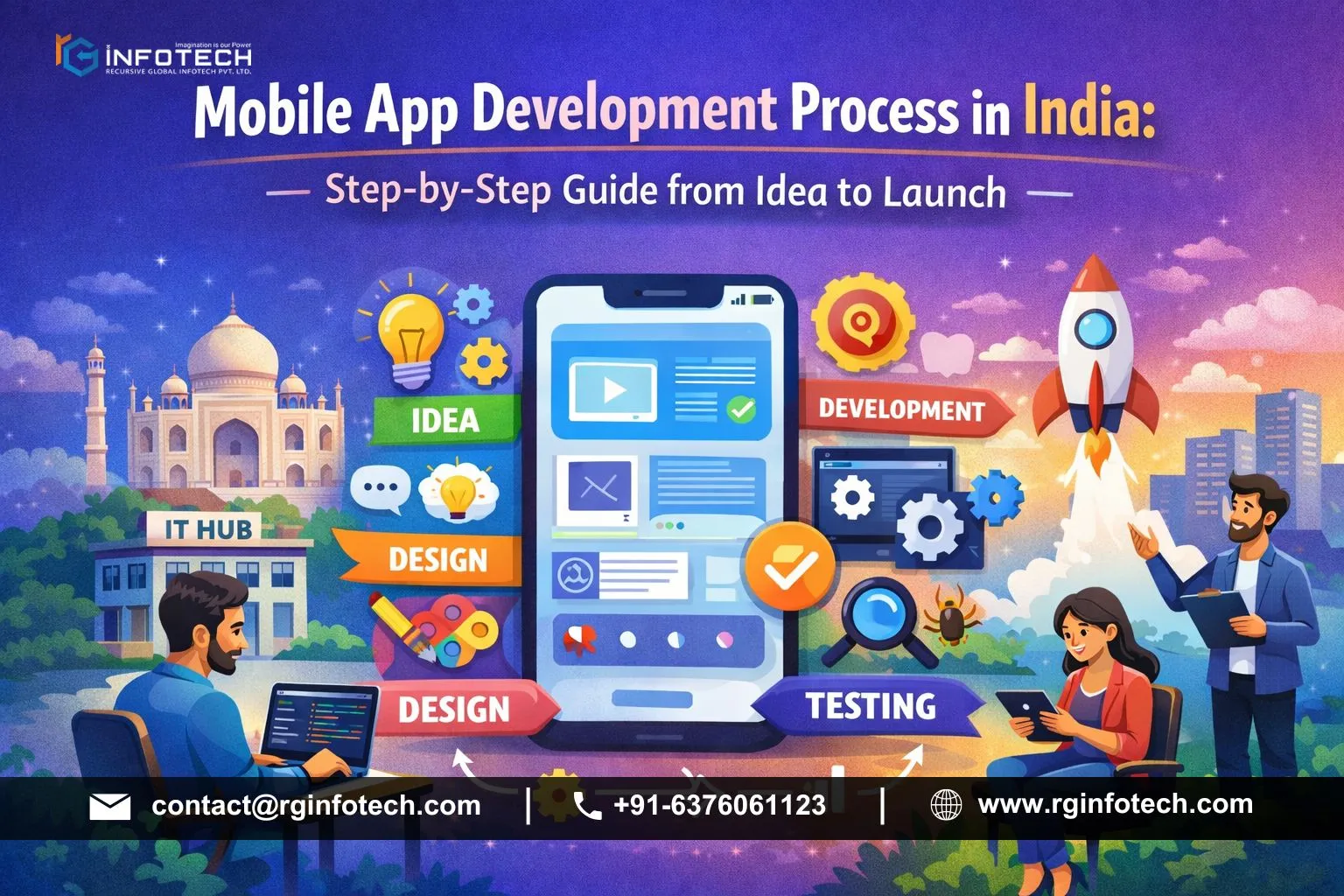
The mobile app development process in India involves idea validation, planning, UI/UX design, development, testing, deployment, and maintenance.
This guide will provide you with complete knowledge about the app development process. By understanding this, you can partner with a mobile app development company in India to mitigate risks and drive long-term business success.
The mobile app development process in India has emerged as a competitive edge for startups and international brands, as we can see that thousands of apps are published daily on Google Play and the App Store.
Over 78% of the world’s population had access to smartphones in 2025, with regions like India. India leads the world in mobile app downloads with over 25 billion downloads in 2024, and it is the world’s highest download market as per the reports published by Communication Today.
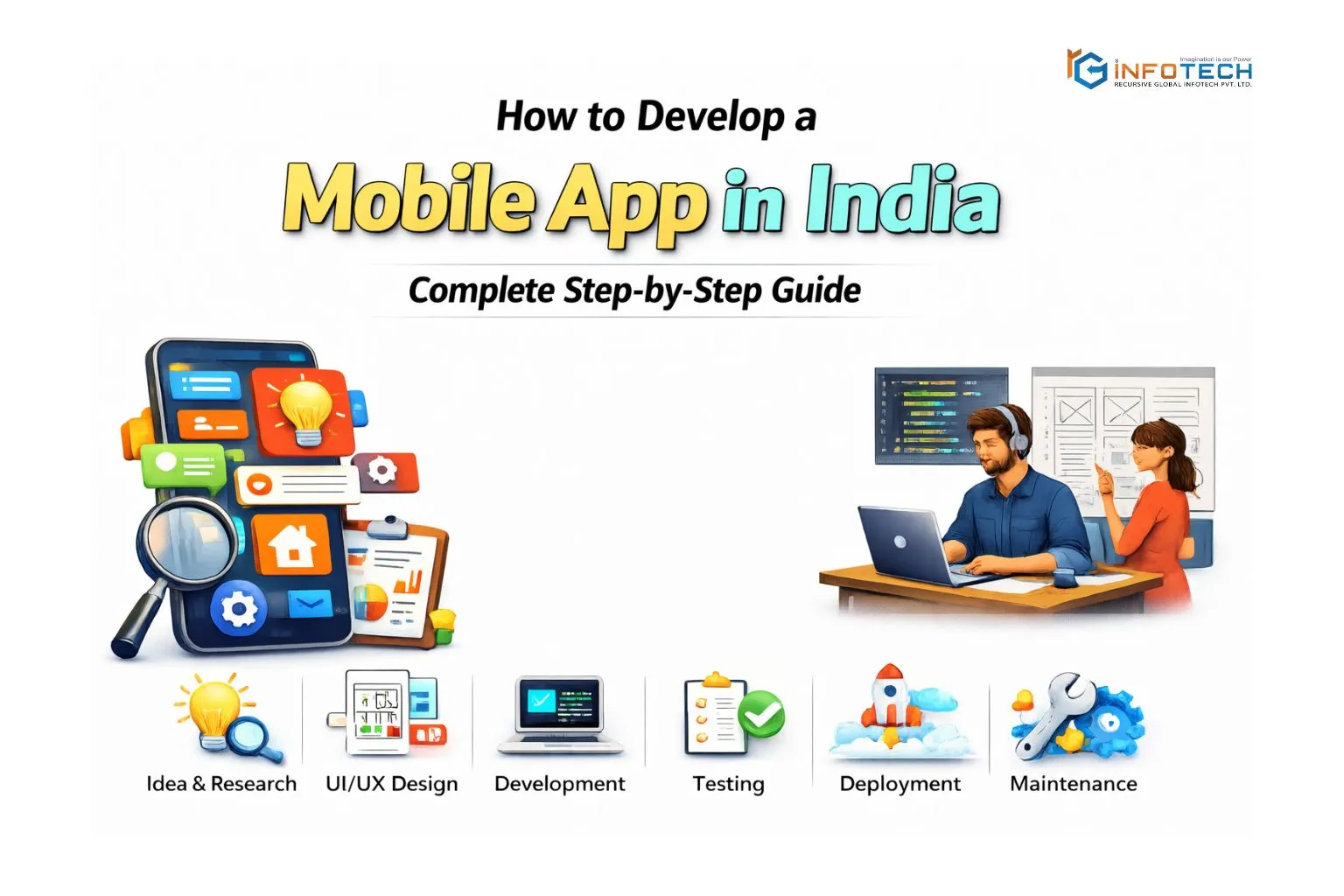
To develop a successful mobile app in India, it is essential to be aware of the app development lifecycle that helps turn an app idea into a fully functional app.
In this guide, we are going to discuss the steps we follow to build our apps: research, planning, UI/UX design, development, testing, deployment, and optimization, all of which are crucial for app success.
Before moving forward with the app development process, there is something that clicks in our mind: Let’s clear that out. What is mobile app development?
Mobile App Development is the process of building a software solution for mobile devices like tablets and smartphones on iOS and Android platforms. Based on business requirements, applications can be developed as native, cross-platform, or hybrid apps.
In this step-by-step guide, we will give you a complete walkthrough of the development process from validating your idea and gathering requirements for building your app.
Mobile app development stages involve designing, developing, testing, and launching applications for iOS and Android platforms. Let’s get this in detail.
Ready to Turn Your App Idea into Reality?
Partner with RG Infotech and develop a scalable mobile app that meets your business objectives. Let’s create something amazing together.
7 Steps for Mobile App Development Process in India
When creating a mobile app in India, it is essential to follow a step-by-step process, from idea validation to the post-launch phase.
India boasts the best talent pool and a cost-effective development environment, making it the most preferred destination for businesses worldwide.
In this section, we will discuss the 7 key mobile app development steps involved.
Step 1 – App Idea, its Validation and Market Research
The most important step in the mobile app development process in India is to get an app idea, then to check its validity and go through market research.

Many apps fail not because they are poorly developed but because they are trying to solve a problem that doesn’t exist or because they are targeting the wrong market. Spending time on validation will save you months of development time and money.
Identifying Target Users
Knowing your users is the key to a successful mobile app. Identify your target audience by thinking about demographics, behavior patterns, preferences, and pain points. Ask yourself these questions:
- Who will use my app daily?
- What are they trying to solve?
- How tech-savvy is my audience?
Competitor Analysis
The next thing to do is competitor research, an effective way to discover market gaps and best practices.
- Direct Competitors: Apps that provide the same service or appeal to the same audience.
- Indirect Competitors: Apps that solve similar problems but in a different manner.
- Analysis Points: Functionality, user experience, rating, monetization model, marketing approach.
Defining App Goals and Features
After identifying the target audience and competitors, it is essential to define what your app will deliver and the key features.
- App Goals: The app goals may include increasing engagement, making money, simplifying tasks, or solving a particular problem.
- Feature List: Must-haves (core functionality), nice-to-haves (future enhancements), and unique features that set your app apart.
- MVP Planning: Features to prioritize for an initial Minimum Viable Product to test the market quickly and affordably.
- Benefit: Well-defined goals and features eliminate scope creep, reduce development costs, and ensure your app meets user needs.
Step 2 – Planning and Strategy for Mobile App Development in India
Once you have finalized your app idea, the planning and strategy phase becomes very important. This phase helps you ensure that your mobile application development process is well-organized and cost-effective.
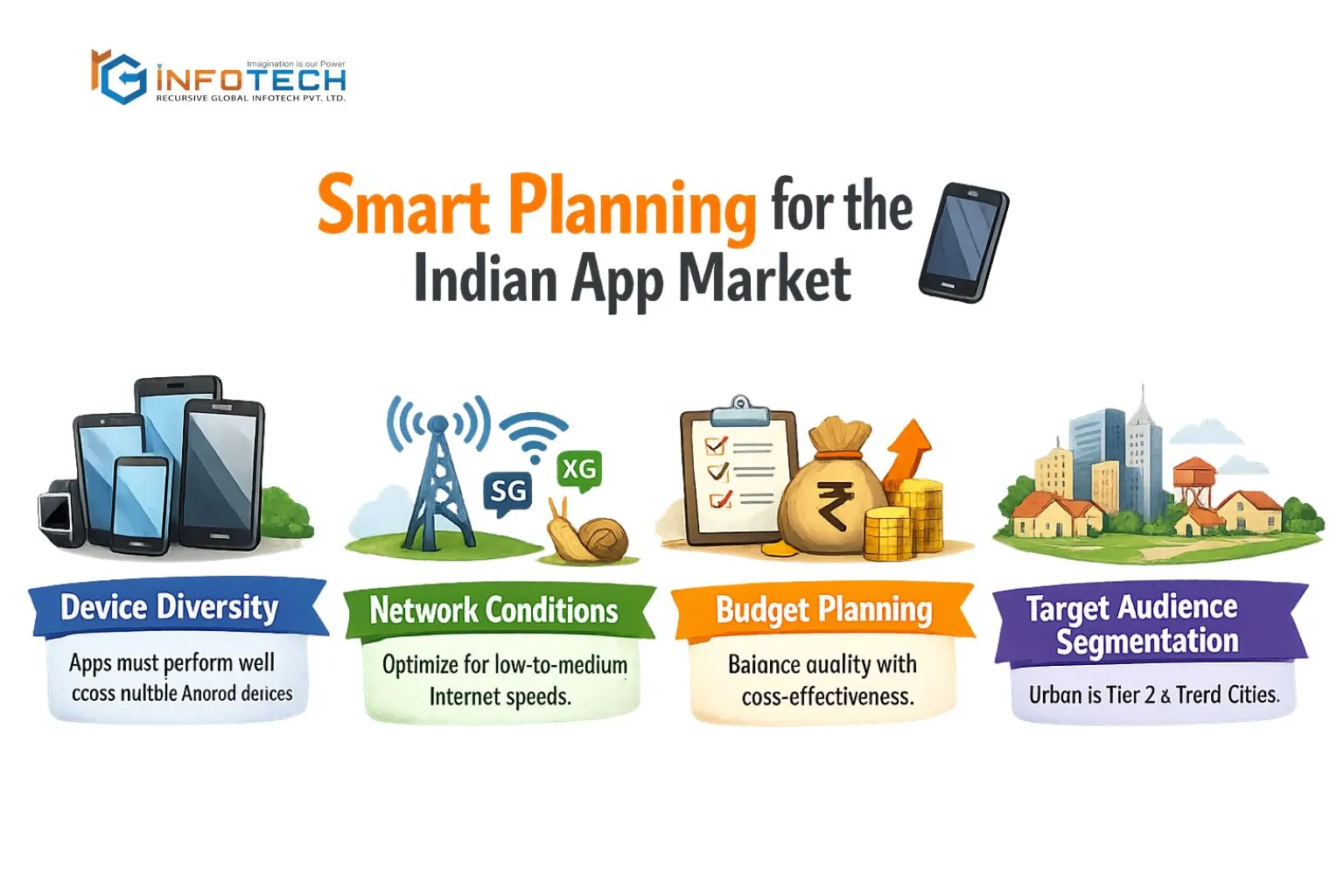
This phase consists of three important elements: platform selection, technology stack, and project roadmap.
Choosing the Right Platform
The choice of platform influences the reach, performance, and cost of your app:
- Android: Most popular in India, with a market share of approximately 80% of users. Suitable for mass-market apps. Technology: Kotlin, Java.
- iOS: Suitable for high-end users with high engagement and spending. Technology: Swift, Objective-C.
- Cross-Platform: Reaches both Android and iOS users at the same time.
- Technology: Flutter, React Native.
Choosing The Tech Stack
The tech stack is what will determine how your app is developed, how quickly it will run, and how scalable it will be in the long run:
- Frontend Development: Flutter, React Native, Kotlin, Swift
- Backend Development: Node.js, Django, Laravel
- Database Management: MySQL, MongoDB, PostgreSQL
- Cloud & DevOps: AWS, Firebase, Docker, Kubernetes
Project Roadmap and Timeline Creation
Roadmap planning helps keep the project on track and ensures timely completion:
- Milestones: Design, development, testing, deployment, and post-launch activities.
- Timeline: Realistic time allocation for each milestone.
- Resource Allocation: Allocation of developers, designers, and testers.
- Agile Sprints: 2-week cycles for continuous development and feedback.
- Planning and Requirements: 2-3 weeks
- UI/UX Design: 3-4 weeks
- Development: 8-12 weeks
- Testing: 3-4 weeks Deployment: 1-2 weeks
Step 3 – UI/UX Design and Wireframing
After your app idea has been validated and the planning process is complete, the third step of the mobile app development process in India is the UI/UX design process. This step ensures that your app is intuitive, engaging, and visually appealing.
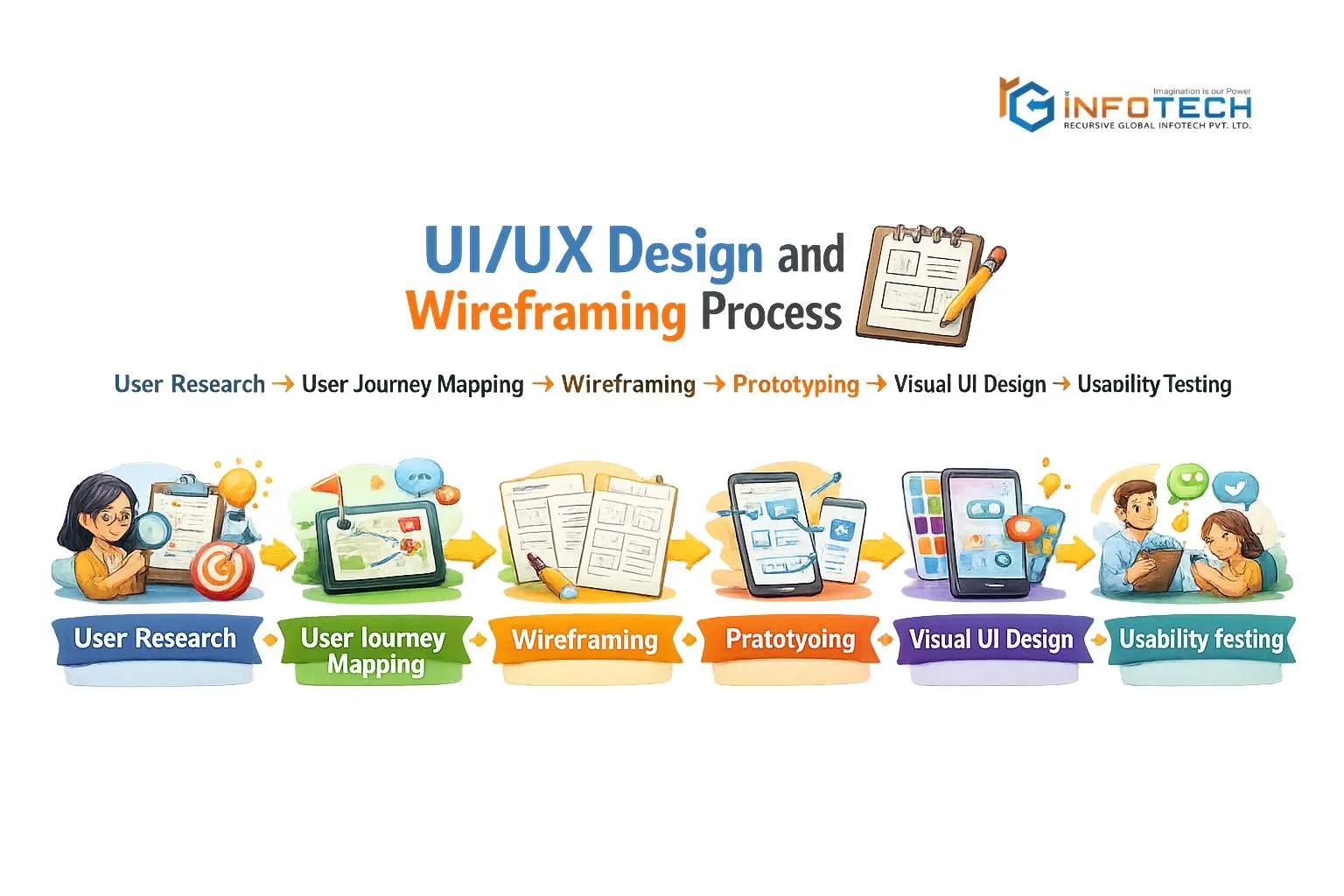
User Journey Mapping
Analyzing how users will engage with your app is essential:
- Define User Flows: Describe the step-by-step process users follow to achieve a task.
- Identify Pain Points: Point out where users might experience difficulties.
- Optimize Navigation: Make it easy for users to move between screens.
Wireframes and Prototypes
Wireframes are the blueprint of your app, and prototypes are how your app comes to life:
- Wireframes: Sketch screens of your app to show layout and content.
- Interactive Prototypes: Clickable prototypes to test how your app would work.
- Why They Are Useful: Get feedback from stakeholders early on, iterate quickly, and fix development mistakes.
- Software Used in India: Figma, Adobe XD, Sketch, InVision
Visual Design and Branding
A well-designed visual identity will make your app more memorable and instill trust in your users:
- UI Design Elements: Buttons, menus, icons, and typography.
- Brand Identity: Colors, fonts, and design should reflect your brand.
- Responsiveness: Design your app to work well on a variety of screen sizes, including the variety of Android screens available in India.
- Accessibility: Think about color contrast, font sizes, and touch-friendly designs.
Step 4 – Mobile App Development
Once the UI/UX design and wireframes have been finalized, the next step in the mobile app development process in India is the actual coding process. This is where your mobile app goes from being a visual idea to a working product. The development process is broken down into frontend development, backend development, and API integration.
A structured and agile approach ensures quick delivery, quality, and scalability.
Frontend Development
Frontend development involves working on the user-facing aspect of the app, which includes everything that the user sees and interacts with.
Key Responsibilities:
- Implementing UI designs into functional screens
- Ensuring smooth navigation and transitions
- Optimizing app performance and responsiveness
- Making the app compatible with devices and screen sizes
- Android: Kotlin, Java
- iOS: Swift
- Cross-platform: Flutter, React Native
Why It Matters:
A well-developed frontend ensures smooth performance, faster loading times, and higher user retention – all of which are essential for a positive app store review.
Backend Development
Backend development is what drives the app in the background. It is responsible for data storage, user authentication, server functionality, and business logic.
Key Components:
- Database management
- Server setup
- User authentication & authorization
- Payment processing systems
- Admin dashboards
Common Backend Technologies Used in India: Node.js, Django, Laravel, Spring Boot
Cloud Platforms: AWS, Google Cloud, Firebase
Why It Matters:
A robust backend is what makes an app scalable, secure, and performant, especially when dealing with thousands or millions of users.
API Integrations
APIs (Application Programming Interfaces) enable your app to interact with other services and third-party applications.
Typical API Integrations:
- Payment gateways (Razorpay, Stripe, PayPal)
- Social media login (Google, Facebook, Apple)
- Maps & location services
- Push notifications
- Analytics tools
- Faster development
- Improved functionality
- Lower development costs
- Better user experience
Step 5 – App Testing and Quality Assurance
The testing phase is an essential part of the mobile app development process in India. Before the final launch of your app on the Play Store or App Store, it is necessary that your app goes through a rigorous quality assurance process to ensure that your app runs seamlessly on all devices and networks.
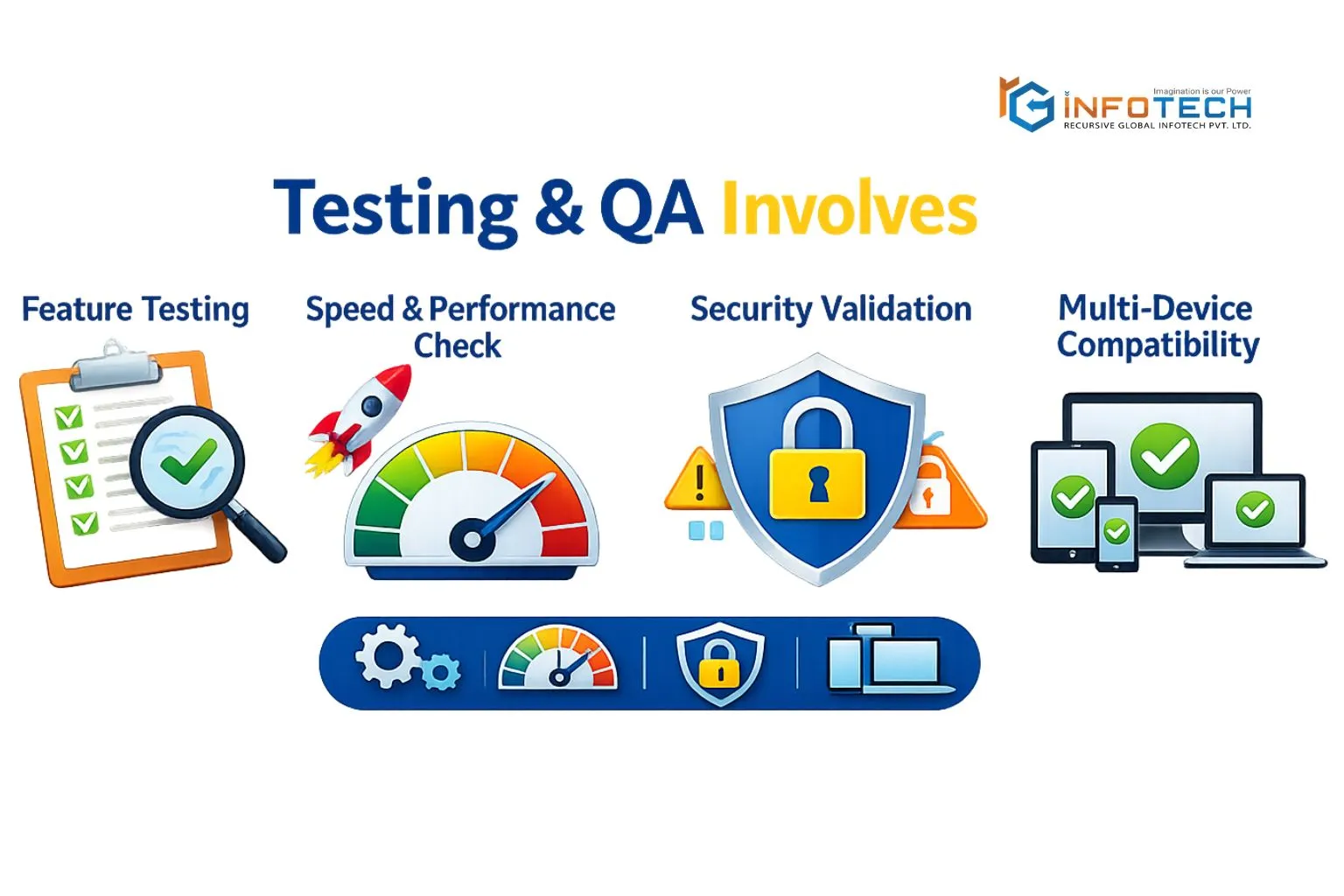
The Quality Assurance process helps to minimize bugs, crashes, security issues, and user dissatisfaction. This step involves functional testing, performance testing, and security testing.
Functional Testing
Functional testing is done to ensure that all the functionalities of your app are working as expected.
What It Covers:
- User registration and login functionality
- Navigation between screens
- Form submission
- Payment functionality
- Notification functionality
- Integration with third-party services
Performance Testing
Performance testing is done to check the app’s performance under varying conditions.
Key Areas Tested:
- App loading time
- Response time
- App stability under heavy user traffic
- Battery usage
- Data usage efficiency
Why It Matters:
Uninstall rates are higher for apps that are slow or laggy. Performance testing helps ensure your app performs well even under heavy loads.
Step 6 – App Deployment and Mobile App Launch Process
Once you have completed the development and testing process, the final step in the mobile app development process in India is the deployment and launch of your application. This step is crucial to ensure that your app is launched in the market effectively.
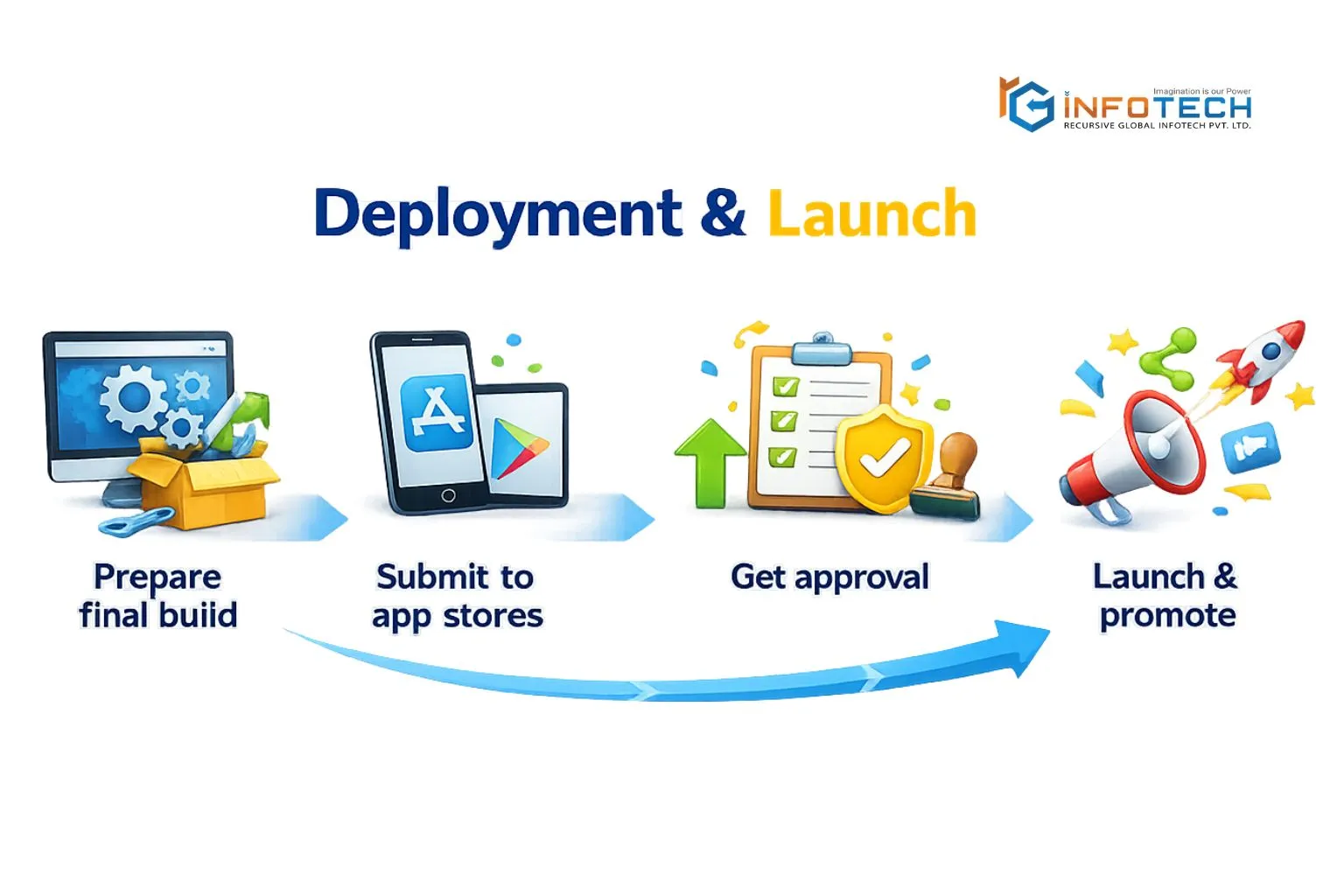
The launch of your app plays a significant role in determining the success of your application.
App Store & Google Play Submission
App submission is more than just uploading a file. Both platforms have guidelines and review processes that must be followed.
Key Steps:
- Creating developer accounts
- Preparing app metadata (title, description, keywords)
- Designing screenshots and preview videos
- Setting pricing and regional availability
- Ensuring compliance with platform policies
- Google Play Store (faster approval process)
- Apple App Store (stricter review guidelines)
Why It Matters:
Optimized titles, keywords, and images can help increase the visibility of an app.
Launch Strategy
Strategic launch is an effective way to get early momentum and positive reviews.
Common Launch Strategies:
- Soft launch in a restricted area for feedback
- Beta testing with selected users
- Gradual launch to test performance
- Public launch on a large scale
Marketing and Promotion
A mobile app will not flourish without promotion. Marketing should start before the actual launch of the app.
Effective Promotion Methods:
- Social media marketing (LinkedIn, Instagram, Facebook)
- Collaborations with influencers
- Email marketing campaigns
- Paid advertising (Google Ads, Meta Ads
- Content marketing and SEO
- Referral programs
- Push notifications
- In-app engagement campaigns
Why It Matters:
Good marketing leads to better downloads, retention, and ROI.
Step 7 – Post e-Launch Maintenance and Updates
Releasing your app is not the end of the mobile app development process in India; it is actually the start of the journey. The process of maintaining your app after its launch ensures that your app is secure and competitive in the ever-changing digital landscape.
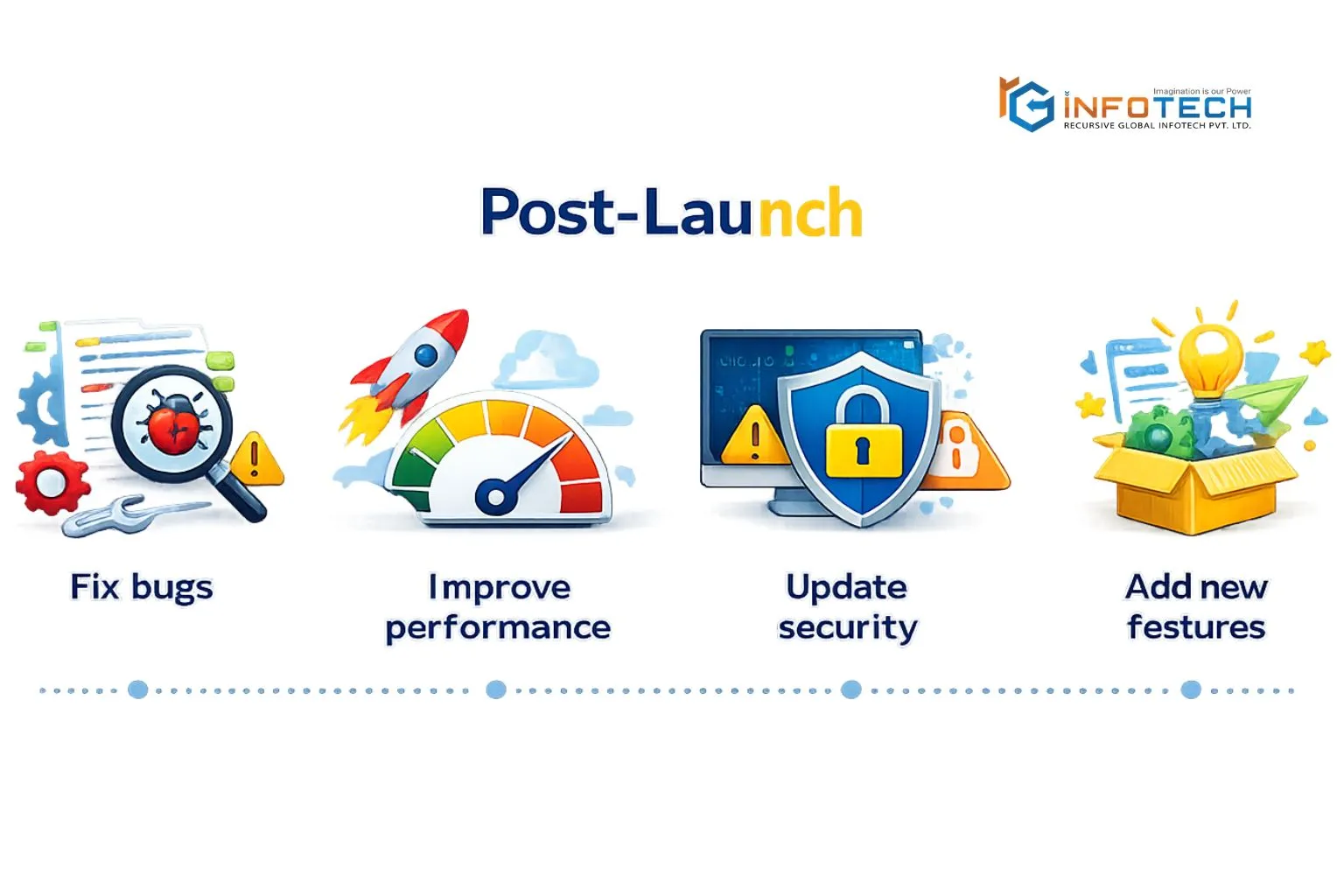
Monitoring and updating your app is crucial to enhancing user retention and overall ROI.
Performance Monitoring
It is essential to monitor your app’s performance after its launch.
Key Areas to Monitor:
- App loading speed
- Crash reports and error logs
- Server response time
- User engagement metrics
- Battery and data usage
- Firebase Analytics
- Google Analytics
- Crashlytics
- Mixpanel
Why It Matters:
Apps with high crash rates or loading times are poorly rated and have high uninstallation rates.
Bug Fixes and Updates
There is no flawless app at the time of its launch. Updates are necessary for smooth performance and security compliance.
Maintenance Tasks Include:
- Bug fixes as reported by users
- Security issues resolution
- API and third-party service updates
- Compatibility with the latest Android and iOS versions
Why It Matters:
Regular updates reflect reliability to users and boost rankings on app stores.
Feature Enhancements
User feedback and analytics help to improve the app over time.
Strategies for Enhancement:
- Implementation of requested features
- Enhancements in UI/UX based on user behavior
- Implementation of new technologies such as AI, chatbots, and automation
- Scaling infrastructure to accommodate the growing number of users
- Implementation of new features retains users and keeps your app one step ahead of the competition.
Why It Matters:
Innovation helps to retain users, increase lifetime value, and drive overall business growth.
Cost and Timeline of Mobile App Development in India
The cost and timeline of mobile app development in India can help businesses to plan their budget and expectations.
The total investment required will depend on the complexity of the app, functionalities, platforms, and technology used.
For a detailed analysis of the costs involved in mobile app development, refer to our comprehensive guide on Mobile App Development Cost. This guide has all the information you need to make the right decisions.
Mobile App Development Cost In India:
App Type
Estimated Cost
Basic App (MVP)
$5,000 – $15,000
Medium Complexity App
$15,000 – $40,000
Complex / Enterprise App
$40,000 – $120,000+
Timeline of Mobile App Development in India:
App Complexity
Development Time
MVP
8–12 Weeks
Medium App
3–6 Months
Complex App
6–12 Months
Why India Is Cost-Effective:
When compared to the US or UK market (where rates per hour range from $100 to $200), Indian developers charge anywhere between $15 and $60 per hour, providing quality output at an affordable cost.
Launch Your Dream App with Industry Experts
Partner with RG Infotech for innovative and seamless app development. Get started today and elevate your business to the next level.
Why Hire a Mobile App Development Company in India
Outsourcing to a professional mobile app development company in India provides several advantages.
1. Skilled Talent Pool
India has the largest talent pool of experienced Android, iOS, and cross-platform developers. To know about the cost to hire a mobile app developer in India, check our esteemed guide.
2. Cost Efficiency
Development at a lower cost without compromising on quality.
3. Agile Development Methodology
Agile is the most widely adopted development methodology in Indian companies.
4. End-to-End Solutions
Right from idea validation and UI/UX design to development, testing, and deployment.
5. Scalability
Scalable teams according to project requirements.
6. Global Experience
Many Indian companies have clients in the US, UK, Australia, and the Middle East, which ensures that the quality is international.
Always check the portfolio, client testimonials, technical knowledge, and communication processes before hiring.
Partner with RG Infotech to get a user-centric and successful app development experience. We have completed over 1250 projects on web and mobile apps. We are one of the best mobile app development companies in India, with over 15 years of experience.
Contact our experts, mobile app developers, and build your app today.
Final Thoughts
The process of mobile app development in India is done in a planned, agile, and cost-effective manner, right from the validation of the idea to the maintenance phase post-launch. This makes India one of the leading destinations for app development outsourcing in the world, thanks to the availability of qualified developers and scalable infrastructure.
Whether you are a startup launching an MVP or an enterprise launching a complex digital platform, understanding the entire process, from planning to development, testing, deployment, and cost, is essential to ensure a successful launch.
Selecting the right development partner in India can help you achieve this goal.