Summary:
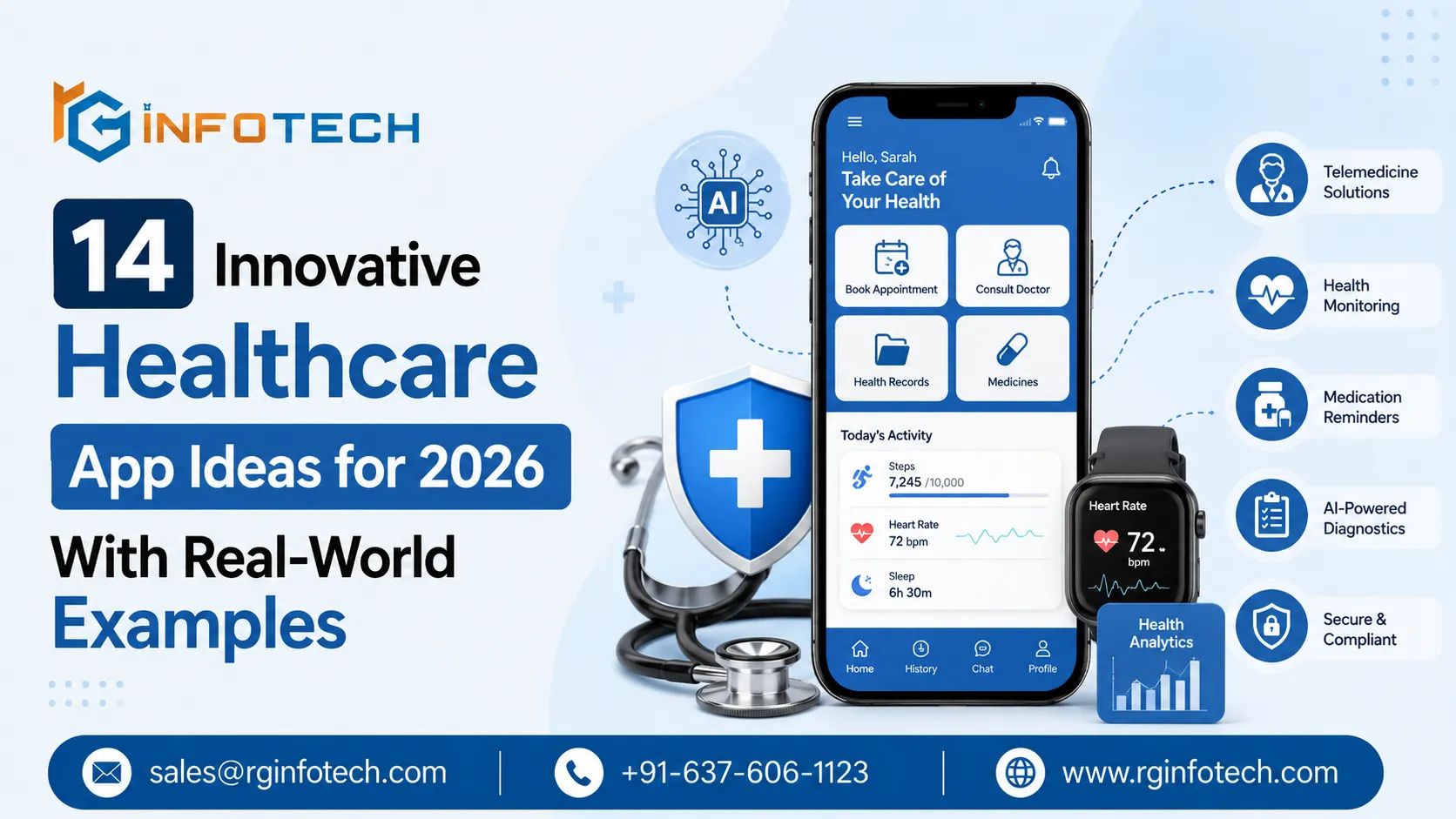
Learn about 14 profitable digital healthcare app ideas for 2026, such as a telemedicine app, AI-based healthcare application, remote patient monitoring, digital rehabilitation, and many more. Learn everything there is to know about your idea’s monetization opportunities, cost, and validation.
The healthcare app ideas are transforming the way patients access hospital care and clinic treatment.
Now patients need more convenience when accessing healthcare services and receiving personalized data, records, medicine reminders, monitoring, and consultation through their smartphones.
AI app ideas for healthcare provide great opportunities for entrepreneurs, start-ups, healthcare companies, and technology companies looking to innovate their digital health space.
Key Takeaways:
- As per WHO, 70% of countries have a digital health strategy.
- 129 countries have established national digital health strategies.
- The growing focus on interoperability, privacy, AI, telehealth, and digital infrastructure.
- 32% of U.S. adults have used AI chatbots for health information.
- The FDA continues to develop guidance for AI-enabled and digital-health technologies.
- 57% of U.S. adults own at least one wearable or connected health device.
With the increasing popularity of healthcare, many companies have started thinking about developing an mHealth app.
One problem that most companies face in this regard is making an app that fulfills no particular user need.
If you want to create healthcare applications, then build something that solves problems and improves patient experience rather than creating a wellness app.
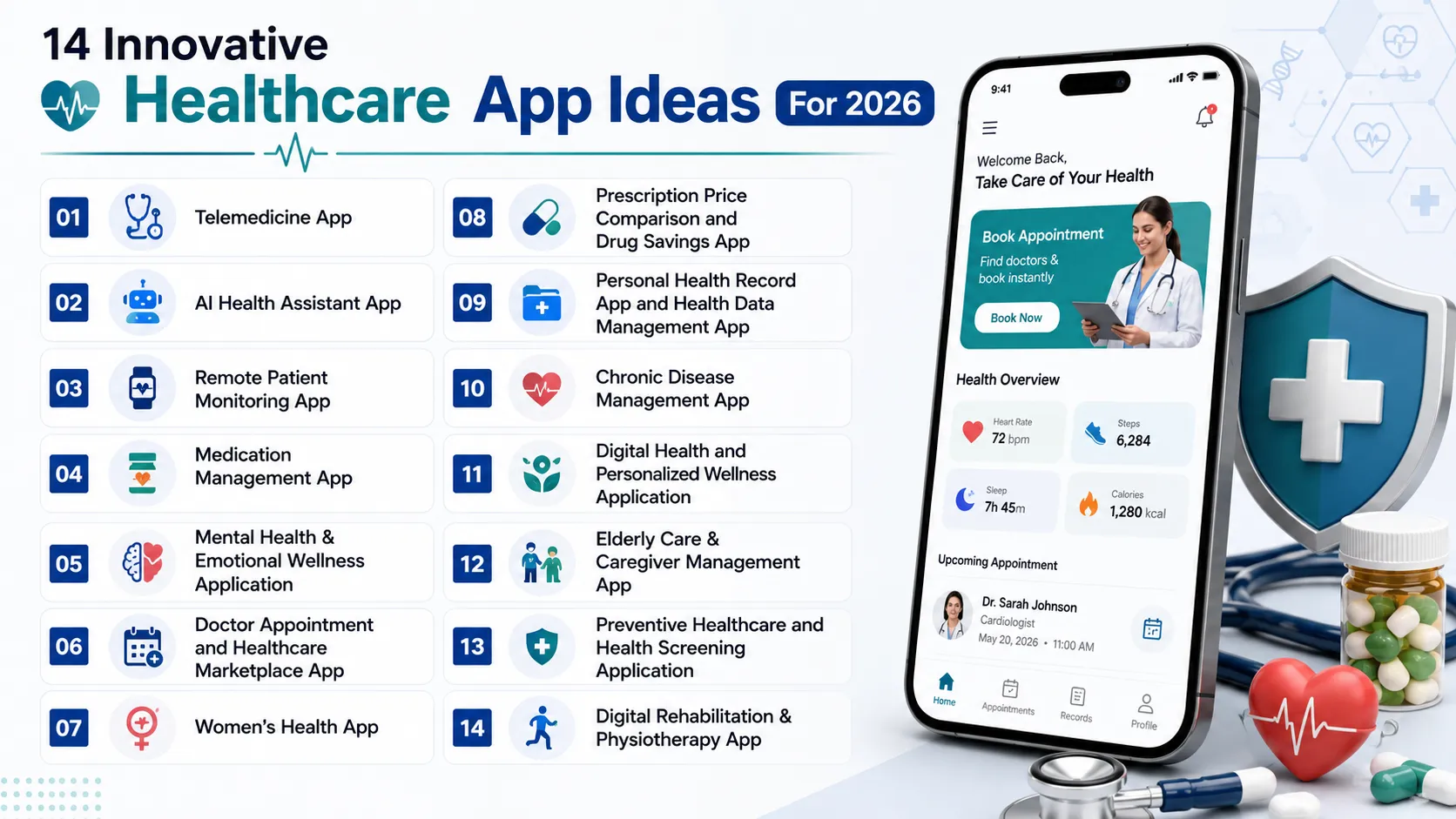
This guide reveals 14 best healthcare app development ideas that will be beneficial to invest in 2026. With practical examples, you will learn about the features, business prospects, and development issues that will make a healthcare application a winning one.
Get Your Healthcare App Developed by RG Infotech
Got an idea for a healthcare app? We will help you develop a safe, reliable, and easy-to-use healthcare app.
14 Successful Healthcare App Ideas 2026
Healthcare has been quick to adapt to digital technologies, giving rise to great prospects for startups, hospitals, clinics, and entrepreneurs.
However, which healthcare applications are profitable? To know in detail, continue reading the blog.
Here are the top healthcare app ideas for 2026.
1. Telemedicine App
A telemedicine application enables patients to communicate with healthcare providers remotely via video, audio, chat, or any other digital process.
A telemedicine system is not limited to basic video conferencing. It can integrate scheduling appointments, virtual consultations, prescribing medications, medical records, payment, follow-ups, treatment plans, and physician communications.
How the application works
The patient makes an account, looks for a suitable practitioner, checks availability, makes an appointment, does the consultation either via video or audio means, gets all the necessary information afterward, and maintains the relationship using this platform.
Key Features
- Patient registration and profiles
- Physician profiles
- Appointment booking
- Real-time availability
- Audio-visual consultations
- Secure messaging
Real-World Example: Doxy.me
The simplicity of telemedicine products may prove an effective way to gain users. For instance, Doxy.me is a platform where users can join sessions by clicking on the link of a doctor without installing any application or making an account as a patient.
Doxy.me claims that more than 1.5 million providers have joined their platform, and the providers have offered 14 billion minutes of services.
Opportunity score
9/10
The telemedicine industry is promising due to its relatively straightforward value proposition, but it could prove tough due to intense competition.
2. AI Health Assistant App
AI is an emerging medical app idea for the development of new-generation apps. Artificial intelligence in healthcare helps people learn, comprehend their symptoms, prepare for appointments, collect and organize health-related information, and get access to correct healthcare pathways.
The AI health assistant app does not try to pose as a substitute for professionals in the field. Instead, it becomes a health navigator and educator.
AI can increase the usefulness of healthcare applications, but healthcare AI is not limited to hooking up an LLM to a chat interface.
Key Features
- Conversation interface
- Symptom entry
- Customized questions
- Medical history
- Care coordination
- Provider matching
Real World Example: Ada Health
Ada Health provides an instance of where the use of AI can be utilized for assessing and navigating health.
As per Ada, the company’s platform has performed over 34 million assessments of symptoms and claims over 14 million users on its corporate page. Their technology is said to be the fusion of medical expertise and AI.
Opportunity score
9/10
High opportunity and high differentiation—but also high responsibility.
3. Remote Patient Monitoring App
Remote Patient Monitoring software connects health devices, mobile capabilities, patient dashboards, alerting functions, and clinical workflow to enable healthcare providers to monitor their patients outside of office visits.
The most promising opportunity does not lie in gathering health information. It lies in using it in an organized process for remote patient care where healthcare providers can recognize significant changes and act accordingly.
How the app can be utilized:
- Glucose monitors
- Blood-pressure monitors
- Pulse oximeter devices
- Wearables
- Smart scales
- ECG devices
- Other connected devices
Key features
- Device integration
- Real-time/scheduled data gathering
- Patient dashboard
- Provider dashboard
- Visualization of digital health trends
- Alerts and notifications
Real-World Application: Dexcom
Dexcom is the best example for healthcare mobile app development. The integration of connected devices, mobile applications, and constant data can be applied to health and wellness together.
The company’s ecosystem revolves around continuous glucose monitoring technology and applications.
Opportunity score
9/10
Great opportunity, but also great complexity can exist with it.
4. Medication Management App
Management of medicines is one area of health care that might seem simple at first glance but becomes quite complex when one considers situations in which many medicines must be taken, among other factors.
A medication management app will help organize the user’s medication schedule.
Key Features
- Medication schedule
- Smart alerts
- Tracking dose
- Refills reminder
- Prescription storage
- Medication history
Real-World Example: Medisafe
According to Medisafe, there are currently over 13 million patients who use the Medisafe platform in over 150 countries.
Some features offered by their product include medication reminders, tracking measurements, caregiver support, progress reporting, and medication interaction notifications.
Medisafe has also conducted some research on medication adherence and prescription claims.
Opportunity score
9/10
Market potential is great, yet trust and reliable product design are crucial.
5. Mental Health & Emotional Wellness Application
Some applications can provide digital self-help solutions in relation to mental well-being through self-management, education, habit-forming, journaling, mindfulness techniques, as well as professional help.
Mental health apps need to pay particular attention to user experience, privacy, content and safety considerations.
The app should make a clear distinction between its wellness functions and any clinical services and should avoid making any unfounded claims about diagnostics and treatment.
The company needs to establish if the product offered by the start-up is:
- Wellness-oriented
- Educational
- Coaching-based
- Therapy-based
- Clinical
Real World Example: Headspace
Headspace is one existing platform designed for the mental wellness of consumers by incorporating meditation, mindfulness and other behavior-related health aspects.
Opportunity score
9/10
This is a wide market, but trust and responsibility are paramount here.
6. Doctor Appointment and Healthcare Marketplace App
Matching the right healthcare provider can be hard for the patient who has to look at different sites or call different clinics individually.
A healthcare marketplace can bring together the provider, the patient, availability, insurance information, reviews, and appointment booking all together.
How a healthcare appointment application facilitates:
Searching → Selection of doctor → Availability → Insurance coverage → Booking → Reminders → Initial assessment
Key Features
- Search for doctors
- Filters by specialty
- Search by location
- Filters by insurance
- Provider profiles
- Reviews
Real World Example: Zocdoc
Zocdoc is an online healthcare marketplace that enables patients to find doctors, browse specialties and availability, verify insurance coverage, and schedule appointments. Zocdoc claims millions of individuals use their services every month.
In addition, Zocdoc has started providing AI-based scheduling through Zo by Zocdoc, which assists with scheduling appointments via phone conversations.
Opportunity score
8.5/10
Businesses in the marketplace will scale nicely but need proper supply and demand management.
7. Women’s Health App
A women’s health app is one of the most intriguing healthcare technology trends because reproductive and hormonal health requires a long-term, very personalized journey for each user.
In lieu of developing a women’s health app in general, opt for addressing a particular issue.
Examples:
Fertility + clinical support
Or
Pregnancy + telemedicine
Or
Postpartum healing + provider communications
An early-stage narrow product may be easier to validate and position.
Categories can include:
- Period tracking
- Fertility
- Pregnancy
- Postpartum
- PCOS
- Menopause
- Perimenopause
- Sexual health
- Women’s wellness
Real-World Example: Flo
Flo is a good example of specialized healthcare product positioning. Flo reported a total of 73 million monthly active users and 6 million paid subscribers, as well as a group of more than 120 healthcare professionals, in January 2025.
Additionally, Flo focuses on expert-approved information and personalized tools for cycles, fertility, pregnancy, and reproductive health.
Opportunity score
8.5/0
High potential user base, yet privacy and appropriate use of sensitive health data is crucial.
8. Prescription Price Comparison and Drug Savings App
Prescribed medicines can be costly, and the consumer might find varying prices based on the pharmacy, location, insurance cover, membership, or discount.
This product can do more than just present drug prices. It has the potential to become a prescription cost management platform bringing together patients, pharmacies, health care providers, and discounts programs.
The app will enable users to:
- Search for drugs
- Compare prices
- Identify participating pharmacies
- Know savings
- Manage prescriptions
- Be reminded when refills are due
- Learn about generics
- Have access to pharmacist information
Real World Example: GoodRx
GoodRx is an example of how well the prescription savings model can be scaled up, with its stated monthly active consumers being 5.3 million in March 2026.
9. Personal Health Record App and Health Data Management App
Healthcare data of patients is scattered among various sources including hospitals, clinics, labs, pharmacies, equipment, and paper documents.
A Personal Health Record (PHR) tool may assist the user to get related information together in one safe place.
India-specific opportunity
Products that cater to the India market can look at integrations and workflows around India’s digital health ecosystem, wherever relevant.
The important opportunity is not simply “store PDFs.”
The right way is:
Collect → Organize → Understand → Share → Act.
Key features
- Medical records
- Laboratory reports
- Medication history
- Allergies
- Vaccinations
- Diagnoses
Real World Example: MyChart
The MyChart system created by Epic is an illustration of how digital access to patients may turn into one of the components of health care.
Epic claims that there are over 195 million active users of MyChart; in addition, billions of logins and over 140 million scheduled appointments via MyChart were registered during the past year.
Opportunity score
9/10
High potential for healthcare ecosystems, but complicated by interoperability and security.
10. Chronic Disease Management App
Many times, patients with chronic conditions need long-term engagement instead of single interactions.
A chronic condition management solution may help to unite:
Monitoring + education + reminders + coaching + provider communication + care plans.
- Diabetes
- Hypertension
- Obesity
- Heart diseases
- Respiratory illnesses
- Kidney diseases
- Arthritis
Key Features
- Specific condition dashboard
- Vital signs monitoring
- Medications monitoring
- Care plans
- Appointment reminders
- Educational materials
Real-World Example: Omada Health
Omada Health is an example of a digitally-based approach to chronic care that involves the use of digital solutions, health coaching, connected devices, and condition management.
Opportunity score
9/10
Especially relevant for B2B healthcare, employers, payers, and providers.
11. Digital Health and Personalized Wellness Application
Many patients have health-related information scattered among various institutions such as hospitals, clinics, laboratories, drugstores, medical devices, and on paper.
A PHR application can assist the user in gathering relevant information in one secure place.
A digital health solution may integrate the following areas:
- Lifestyle monitoring
- Nutrition
- Fitness
- Sleep
- Sexual well-being
- Dermatology
- Mental wellness
- Personalized health services
Key Features
- Medical records
- Laboratory results
- Medication history
- Allergies
- Immunizations
- Diagnostic results
Example in Practice: Hims & Hers
The business example of Hims & Hers illustrates how a consumer health platform combines digital and healthcare services in its operations. In 2025, the company made approximately $2.35 billion in revenues and had over 2.5 million subscribers.
Opportunity score
9/10
Good opportunity for healthcare ecosystems, but interoperability and security can complicate the product.
12. Elderly Care & Caregiver Management App
An aging population creates an important opportunity for digital tools that support not only older adults but also their family members and professional caregivers.
The user isn’t always the patient.
Often, the actual customer journey looks like:
Senior → Daughter/Son → Caregiver → Doctor → Pharmacy
Key Features
- Multiple caregiver profiles
- Medication alerts
- Appointment schedule
- Task management
- Emergency contacts
- Medical records
Real-World Example: Care.com
Care.com is an example of using the digital marketplace method to provide caregiving services. The Care.com platform matches up families and caregivers, covering such caregiving areas as senior care.
What can be learned from this is not to follow the same method but rather that caregiving coordination and finding caregivers can become effective digital processes if they solve a family problem.
Opportunity score
8.5/10
The key is that an optimized caregiver app solves a highly practical problem without trying to be a full healthcare system right away.
13. Preventive Healthcare and Health Screening Application
There is a shift in the healthcare industry towards a move from curative medicine to preventive medicine and early diagnosis of illnesses.
The application for preventive healthcare and health screening is one that can be used by individuals to organize their preventive health-related needs such as health screenings, immunizations, goals, and family history, among others.
This is an alternative to waiting till someone has a health issue before consulting the right healthcare experts.
Key Features
- Food logging
- Nutrition logging
- Exercise logging
- Sleep logging
- Goal setting
- Personalized programs
Real-World Example: One Medical
One Medical is an excellent example of integrating digital access to healthcare services with preventative care programs.
Through their application and healthcare services, One Medical offers support for annual wellness check-ups, preventative screenings, vaccinations, health planning, scheduling appointments, and even virtual care.
The annual wellness program offered by One Medical is centered on prevention and includes such screenings as blood pressure and cholesterol screenings, age-specific cancer/condition screening, preventative vaccinations, and prevention planning.
Opportunity score
High consumer opportunity; high competition.
14. Digital Rehabilitation & Physiotherapy App
One of the fields where technology may assist in providing health care to patients is that of rehabilitation, which involves the provision of care beyond hospitals and clinics.
A digital rehabilitation & Physiotherapy app can be used to enable patients to implement a therapist-prescribed exercise program, monitor their progress, get reminders and learn relevant information.
This area seems especially promising for patients recovering from injury, surgery, or suffering from neurologic or musculoskeletal problems.
Real-World Example: Hinge Health
A great example of a digitally integrated musculoskeletal care platform in the real world is Hinge Health.
The firm uses its digitally integrated platform to assist its users in managing their musculoskeletal issues through exercise therapy and other clinical programs.
It shows how the approach has changed from just providing exercise videos to formulating a digitally integrated care program.
Hinge Health reported having over 2.4 million members at the end of 2025 and about $595 million in revenue in 2025.
What Healthcare Startups Should Avoid
Developing a healthcare app is unlike developing a regular consumer app. It might be associated with patients, medical professionals, sensitive data, clinical processes, integration with third-party applications, as well as software functions that can be subject to regulation.
This is why startups need to test their healthcare mobile app ideas to excel in the long run.
Here are some mistakes that should be avoided when moving forward.
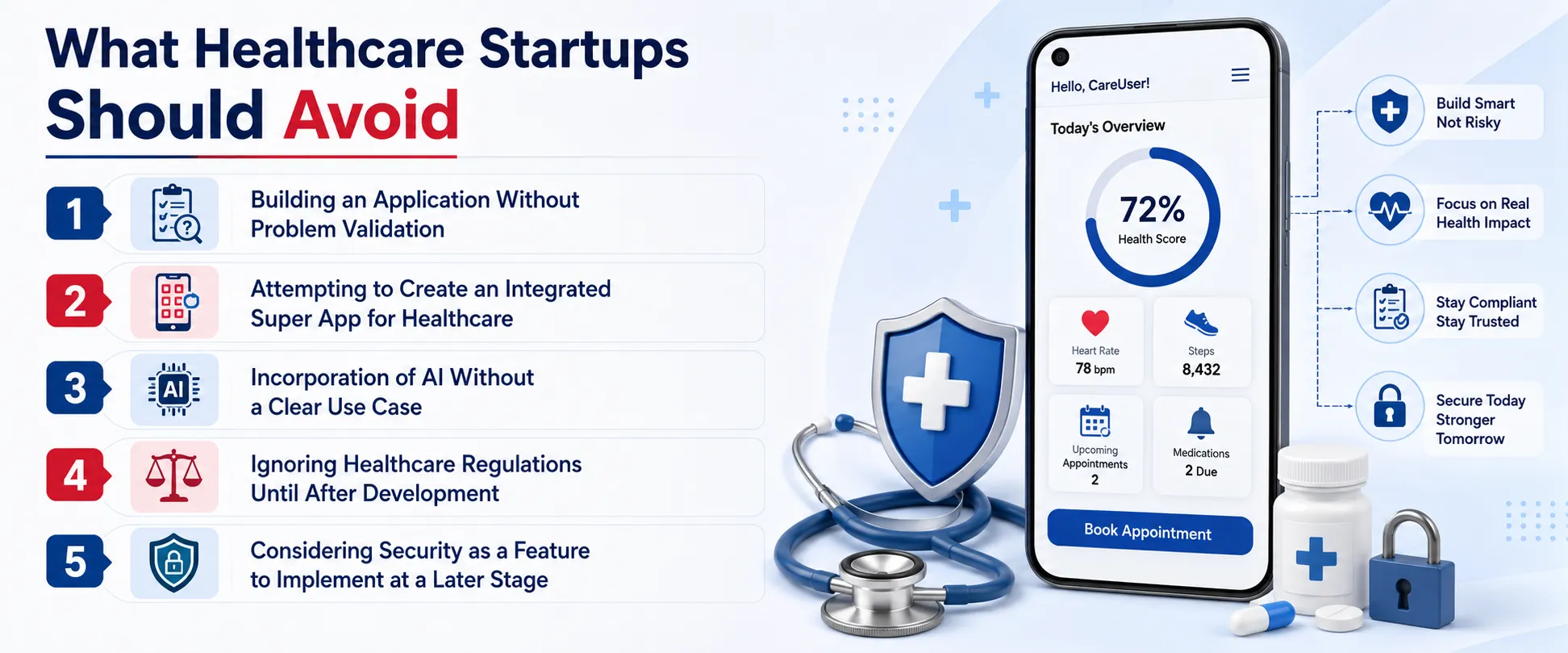
1. Building an Application Without Problem Validation
First of all, a major mistake is the development of the application without confirming whether the intended users really need such a product.
Solution: It is necessary to show that there is a real and valuable problem worth solving.
2. Attempting to Create an Integrated Super App for Healthcare
Another common mistake among startups involves combining all these things into one app:
Telemedicine + Pharmacy + Fitness + AI + Wearable Device Integration + Health Records + Insurance + Appointments + Diagnostics
Solution: This should not be done at once. A focused MVP is easier to build, test, measure, and improve.
3. Incorporation of AI Without a Clear Use Case
AI has tremendous possibilities in the field of healthcare, but just incorporating an AI chatbot because AI is the latest craze does not necessarily lead to the development of a good product.
Solution: First, create the workflow in healthcare and then incorporate AI wherever it adds value.
4. Ignoring Healthcare Regulations Until After Development
Regulatory factors should not be seen as a last-minute checklist at the time of release.
Solution: Consider the possible regulatory path when creating the product rather than after development is completed.
5. Considering Security as a Feature to Implement at a Later Stage
Healthcare systems will work on highly confidential data. Therefore, security has to be included in the architectural design right from the start.
Solution: Focus on documenting the security mechanisms from the start rather than implementing it in the end.
The healthcare startup failure is not selecting the wrong technology for your solution.
Rather, it is building the wrong product without fully understanding the problem, user, healthcare process, regulation, and business model.
For your next healthcare app idea, begin with product discovery and validation.
Why Healthcare App Ideas Require the Right Healthcare App Development Company
Creating a health app is not the same as creating an app that everyone uses. A health app development project can consist of:
- Complicated processes
- Confidential data
- Different users
- Healthcare integration
- Interoperability
- Security issues
- Regulations
- Medical devices
- Artificial intelligence
- Enterprise solutions
- Support
This is why the development cycle must start with product discovery and architecture and not directly from coding. To know in detail about how to choose a healthcare app development company, check our esteemed guide.
At RG Infotech, we will assist you in going from the idea of your healthcare project to MVP and a scalable digital product.
Our healthcare app development lifecycle may involve:
- Healthcare product discovery
- Business and technical analysis
- UX/UI design
- Mobile app development
- Web application development
- Backend development
- API development
- Healthcare integrations
- AI integration
- Wearable/IoT integration
- Testing
- Deployment
- Maintenance and support
Contact us to Discuss Your Healthcare App Idea.
Conclusion
A good healthcare app idea does not have to be the most futuristic.
A good healthcare app idea consists of:
A genuine health issue + Demand for such an app + Product differentiation + Sustainable business model + Reliable technology.
Telemedicine, AI-based health assistants, remote patient monitoring, medicine management, women’s health, chronic condition management, health scheduling, personal health records, and preventative care all offer intriguing possibilities.
It is easier to create an appropriate MVP and business model if you define the problem, target audience, process flow, and outcome that can be measured.
If you plan to develop a health app in 2026, start not with the technology but the problem.
You should solve an important issue, provide a user-friendly experience, ensure the security of users’ information, validate the concept through real users, and build trust.
Ready to Bring Your Healthcare App Idea to Life?
If you are a healthcare startup, hospital, clinic, entrepreneur or enterprise, the first thing to do is transform the idea into a viable product roadmap.
RG Infotech can help you define the MVP, design the UX, choose the appropriate technology stack, plan integrations, and develop a scalable healthcare app. Do you have an idea for a healthcare app? We can talk about it.